
Last updated November 25, 2026
 Wrought iron
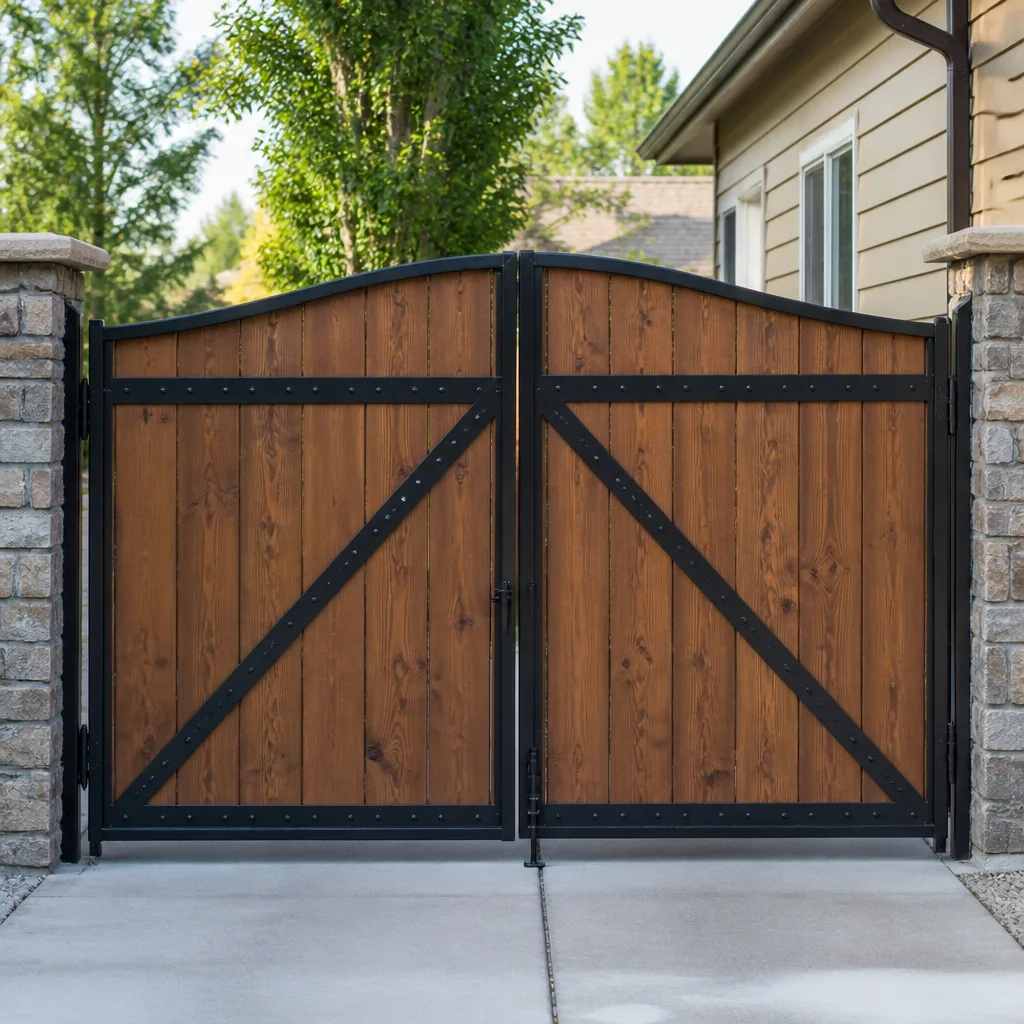 Wood & steel frame
 Farm & ranch
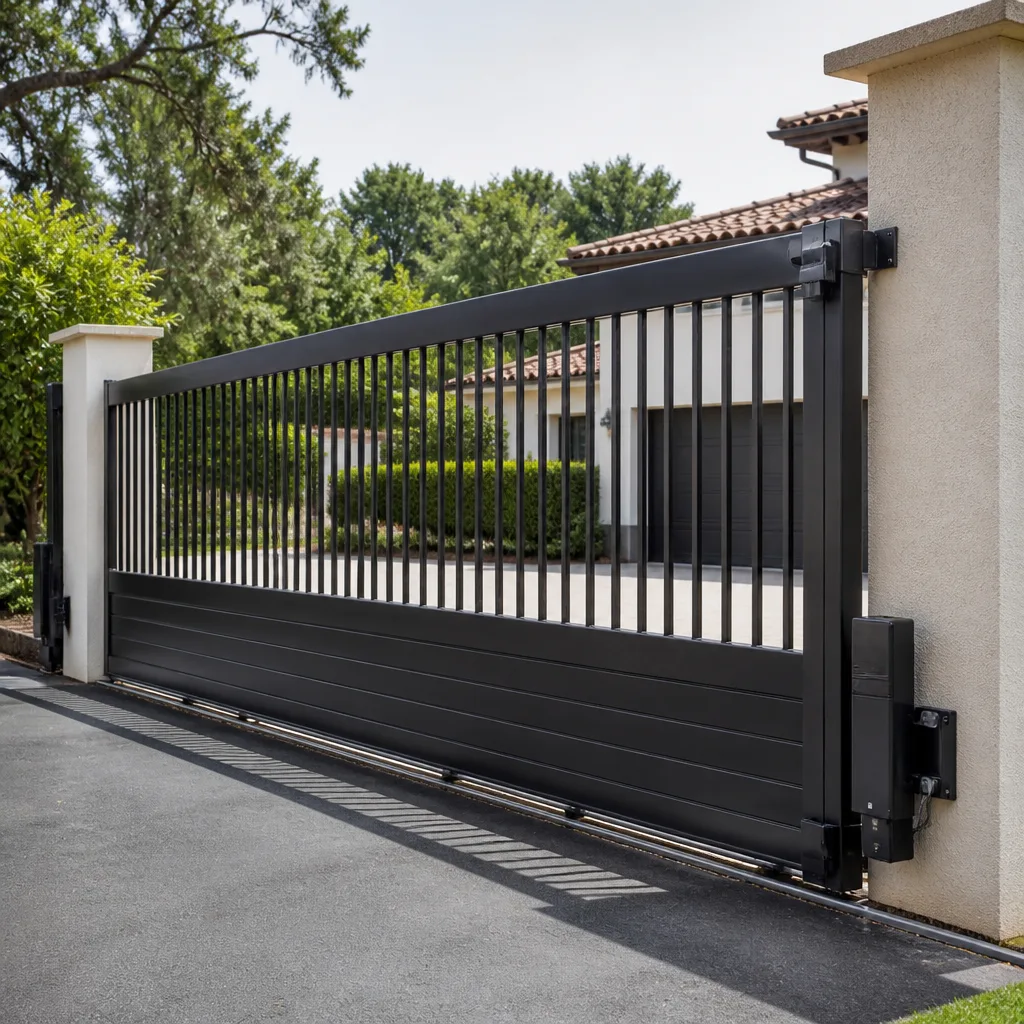 Sliding driveway gates
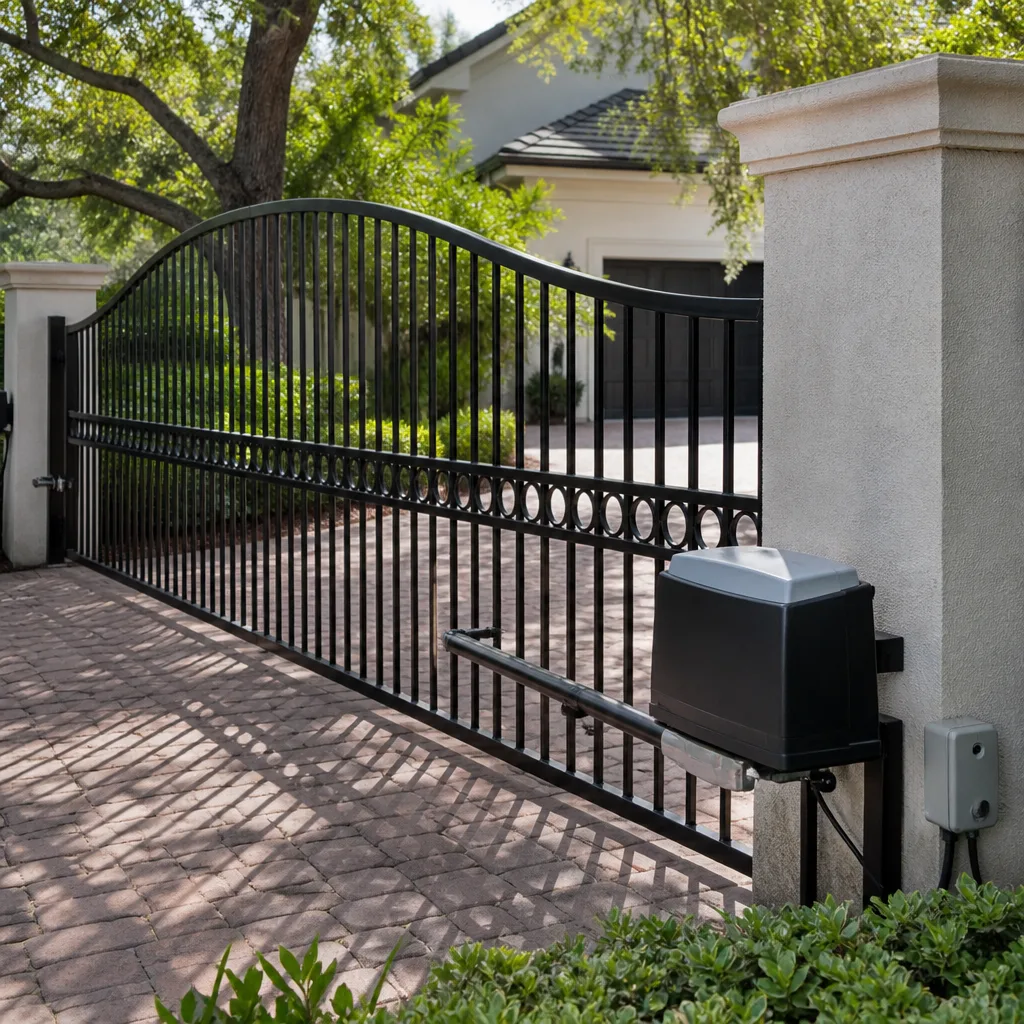 LiftMaster operators
Free on-site gate assessment - hinges, posts, and your LiftMaster or Nice gate operator checked before anything is quoted
The assessment is free and the quote is the invoice.
Get your free estimateDIY vs Professional Gate Repair: The Knoxville Homeowner’s Decision Guide
Replacing a worn hinge pin is a legitimate DIY job, and we’d never tell a homeowner otherwise. Adjusting the limit switches on an automatic operator without understanding how those switches interact with the safety-reverse sensors is a different category of task entirely. Get it wrong and you can end up with a gate that closes on a vehicle, a sensor that no longer reverses when it should, and a liability question your insurance carrier will ask about after an incident. The DIY versus professional debate in gate repair isn’t really about skill level. It’s about system type and failure category. Some failures are homeowner-appropriate. Others sit behind an electrical panel and a safety circuit that carry real risk. This guide walks through which is which for Knoxville homeowners.
Quick Answer
For a manual gate, most mechanical repairs (hinges, latches, sagging posts, sticking swing arms) are reasonable DIY work if you have the right tools and a second set of hands for heavy panels. For any automated, electric, or access-controlled gate, repairs that touch the operator, wiring, control board, safety sensors, or low-voltage circuit are not DIY-appropriate, because they carry electrical and liability exposure that a licensed electrician or dedicated gate technician should handle. In Knoxville, the safe rule of thumb is: mechanical hardware is a maybe, electronics are a no.
Styles & brands we work with
- Wrought iron
- Wood & steel frame
- Farm & ranch
- Sliding driveway gates
- LiftMaster operators
Table of Contents
- The Gate Repair Decision Matrix: System Type and Failure Category
- Repairs That Are Genuinely DIY-Appropriate
- The Automated Components That Require a Tennessee Licensed Electrician
- What Happens to Your Insurance Claim If an Unlicensed Person Modified the System
- Real Cost Comparison: The Five Most Common Knoxville Gate Failures
- Tools and Knowledge Prerequisites for Safe DIY Gate Tasks
- How to Prepare Before a Professional Arrives
- Knoxville-Specific Considerations: Terrain, Weather, and Older Property
The Gate Repair Decision Matrix: System Type and Failure Category
The single biggest mistake homeowners make when deciding whether to DIY a gate repair is treating all gate problems as one category. They’re not. A gate is a mechanical structure, an electrical system, and increasingly a networked access-control device all built into one assembly. Each layer has a different risk profile, and each layer maps to a different decision about who should touch it.
The matrix below is the mental model we use when we diagnose a gate in Knoxville. It splits the decision into two axes: what type of gate system you have, and what category of failure you’re looking at. Where the two intersect tells you whether it’s a weekend project or a call to a professional.
| Failure Category | Manual Gate | Automated / Electric Gate | Access-Controlled Gate |
|---|---|---|---|
| Hinge wear, squeaks, sticking swing | DIY-appropriate | DIY-appropriate (mechanical only) | DIY-appropriate (mechanical only) |
| Latch alignment, handle, drop rod | DIY-appropriate | DIY-appropriate | DIY-appropriate |
| Post sag, ground shift, footing issue | Professional recommended | Professional required | Professional required |
| Operator won’t open or close | N/A | Professional only | Professional only |
| Safety-reverse sensor faults | N/A | Professional only | Professional only |
| Control board, limit switch, or wiring | N/A | Professional only | Professional only |
| Keypad, fob, intercom, or camera integration | N/A | N/A | Professional only |
Read the table from the top down. The higher the row, the more homeowner-friendly the repair. The further right you go, the more the system includes electrical or access-control components that raise the stakes. A sticking hinge on a manual gate in a West Knoxville neighborhood is a straightforward fix. The same sticking hinge on a fully automated LiftMaster or FAAC system may still be a straightforward fix mechanically, but once you touch anything on the operator side, the risk profile changes completely.
The reason this matters so much is that automation changes the failure mode of a gate. A manual gate that fails to latch is inconvenient. An automated gate that fails to sense an obstacle is a safety hazard, and it doesn’t announce itself. The gate looks fine. It cycles. The problem only shows up when a vehicle, a child, or a pet is in the path and the gate doesn’t reverse.
Repairs That Are Genuinely DIY-Appropriate
We’re not going to pretend every gate problem needs a professional. Plenty of gate repairs are well within reach of a capable homeowner with a Saturday morning and a few basic tools, and we tell people that. The key is to stay strictly on the mechanical side of the system. If your repair does not require opening an operator housing, touching a control board, or disconnecting a wire, you’re probably fine.
Here are the tasks we consider homeowner-appropriate for a manual or automated gate, assuming you’re working on the mechanical hardware only:
- Hinge lubrication and adjustment. Greasing a squeaky hinge or snugging a loose hinge bolt is a 10-minute job. If the hinge is worn past adjustment, replacing it on a manual gate is also reasonable with the gate propped and secured.
- Latch and striker alignment. A gate that won’t latch cleanly is often a matter of the striker being a quarter-inch out of position. Loosening the bolts, nudging the striker, and re-tightening is standard homeowner work.
- Handle and pull hardware. Replacing a worn handle, a loose pull, or a drop rod is mechanical and low-risk on a manual gate.
- Visual inspection and lubrication of the track. On a sliding gate, cleaning debris out of the track and lubricating the rollers (if the manufacturer’s manual specifies a lubricant) is routine homeowner maintenance. On automated slides, inspect the track without touching the operator housing.
- Clearing obstructions. If a branch, a rock, or a kid’s toy is blocking the gate’s travel path, that’s a homeowner task. Clear it, test the gate manually (with the operator disengaged per the manual’s instructions), and see if the problem resolves.
- Tightening visible bolts and brackets. If you can see it, reach it, and it’s not part of the operator, tightening a loose bracket is fine.
Two caveats apply even to those tasks. First, a heavy gate panel can crush a hand or a foot if it swings unexpectedly, so block or secure the gate before you work on it. Second, if your gate is automated and you need to move it manually, follow the operator manufacturer’s disengagement procedure exactly. Don’t force a gate that’s still engaged to the operator; you’ll damage the gearbox. If you’re not sure how to disengage it, that’s a signal to stop and get it looked at. Our gate repair page covers the diagnostic side of that conversation.
The Automated Components That Require a Tennessee Licensed Electrician
This is where the DIY decision flips. An automated gate system has two electrical realms: the line-voltage side (the circuit feeding the operator) and the low-voltage side (the control board, sensors, keypads, and accessories). Both are in professional territory, though for different reasons.
The line-voltage side is the one that matters most from a code and safety standpoint. In Tennessee, line-voltage electrical work is the domain of a licensed electrician, and that includes anything from adding a dedicated circuit for a gate operator to moving an existing feed. If your gate operator needs new power run to a location that doesn’t have it, or if the circuit feeding it has failed, that work should be done by a licensed electrician. We’ll say plainly that we’re not telling you to attempt that work yourself, because the risks are serious: shock, fire, and code violations that can affect your insurance and future sale of the home.
The low-voltage side is where DIY gets more tempting and where the real long-term trouble lives. Low-voltage control wiring won’t kill you the way line voltage can, but the components it feeds are what make an automated gate safe and usable:
- Safety-reverse sensors (photo eyes and edge sensors). These devices tell the operator a vehicle or person is in the path. Misaligned, miswired, or incorrectly configured sensors are the most common cause of a gate that closes on a vehicle.
- Limit switches. These set the open and closed positions. Adjusting them without understanding the interplay with the safety sensors can create a gate that stops partway, reverses unexpectedly, or holds open.
- Control boards. The brain of the operator. Board-level faults require both diagnostic skill and knowledge of the specific brand’s behavior. This is where our gate motor & opener work usually lands.
- Loop detectors and exit sensors. Ground-loop wiring and vehicle-detection sensors are common on commercial and HOA entrances around Knoxville, and they fail in ways that look like operator problems.
- Access-control devices. Keypads, fobs, intercoms, and integrated cameras all sit on the low-voltage side and interact with the operator’s logic. Wrongly installed access control can lock a resident out or lock a stranger in.
If your repair involves any of those components, the answer is professional. Not because you can’t learn it, but because the failure mode is a safety hazard and the liability sits with whoever modified the system. That’s the honest reason. We’ve seen LiftMaster, FAAC, BFT, and Linear systems all fail in ways that traced back to a well-meaning sensor adjustment or a DIY keypad install that bypassed the operator’s safety logic.
What Happens to Your Insurance Claim If an Unlicensed Person Modified the System
If an automated gate injures someone or damages a vehicle and the system was modified by an unlicensed person, your homeowner’s liability coverage can be challenged. That’s the part most DIY-focused articles skip. The mechanical repair you did yourself may be perfectly fine. But if the incident traces back to a modification made to the safety or electrical system, and that modification wasn’t done by a licensed or properly qualified person, the claim gets complicated.
Here’s how the sequence usually plays out. After an incident, an insurance adjuster or an investigator looks at the gate system. They ask who worked on it and when. If the answer is “the homeowner adjusted the sensors last summer,” the carrier has a documented basis to argue that the system was altered outside professional standards. Whether or not they deny the claim outright, the question lengthens the process, invites scrutiny, and can result in a partial payout or an increased premium. In some cases the carrier may decline to renew the policy.
We want to be careful here: we’re not saying an unlicensed modification automatically voids your coverage. Insurance policy language varies, and only your carrier can tell you exactly what yours says. What we’re saying is that unlicensed modifications to safety or electrical systems create a documented exposure that can complicate a claim, and it’s worth understanding before you decide to touch the operator side. Ask your carrier the direct question: “If I adjust the safety sensors on my automated gate myself, how does that affect a liability claim?” The answer may surprise you.
The good news is that keeping records of professional service protects you. Every time a properly qualified person works on the gate, that’s part of the documented history of the system, and it cuts both against a claim that the system was neglected and against a claim that it was modified outside standards.
Real Cost Comparison: The Five Most Common Knoxville Gate Failures
Most gate repairs we see in Knoxville fall into five routines. The cost comparison below is not a price list; actual pricing depends on the system, the parts, and what we find on-site, and each price is set per job by the written estimate you get after we diagnose. But it does show the shape of the DIY-versus-professional tradeoff: what you’d spend on parts and your own time versus a professional repair, and what the risk looks like in each case.
| Failure | DIY Realistic Cost | Professional Repair | DIY Risk |
|---|---|---|---|
| Worn hinge or hinge pin | Small parts cost, 30-60 minutes of time | Estimate per job; often straightforward | Low on a manual gate; low on an automated gate if you stay mechanical |
| Gate won’t latch or close fully | Zero if it’s alignment; parts cost if the striker or latch is broken | Estimate per job | Moderate if the gate is automated and the latch misalignment masks a sensor or limit issue |
| Sagging gate or settling post | Cost of post hardware and possibly a helper; hours of labor | Estimate per job; sometimes requires footing work | High. Underestimating the weight of a gate panel is a common cause of injury |
| Operator won’t cycle (no movement, hums, or reverses) | Not realistically DIY | Estimate per job; diagnosis required | Very high. Misdiagnosis is common and parts bought on a guess are wasted |
| Safety sensor fault or control-board issue | Not DIY | Estimate per job | Very high. This is the category where an injury claim is most likely |
The pattern is clear. DIY saves the most on the small mechanical jobs and saves the least on the automated-system jobs, where the risk is highest and the parts-guessing cost is steepest. That’s the actual economics. A homeowner who buys two wrong control boards chasing an operator fault spends more than they would have on a proper diagnosis, and the gate still doesn’t work.
On the other side of the ledger, the professional cost for a sensor or control-board diagnosis is money well spent because it buys an accurate diagnosis. Our whole position on Knoxville Gate Repair Co is that a correct diagnosis on the first visit is worth more than a cheap repair that doesn’t hold. If you’re planning a new gate rather than repairing one, the same logic applies to gate installation.
Tools and Knowledge Prerequisites for Safe DIY Gate Tasks
If you’re going to take on the mechanical side yourself, you should be honest about what you need before you start. A gate repair gone wrong is rarely a matter of breaking a part. It’s usually a matter of the gate moving when it shouldn’t, or the person working on it not having the right support in place. Here’s what a safe homeowner-side repair requires.
Tools
- A socket set and combination wrenches that actually fit your gate’s fasteners. Bolt heads round off fast when the wrong size is used.
- A proper pry bar or lever for adjusting hinges and latches. A screwdriver is not a pry bar.
- Blocks, wedges, or a locking pin to secure the gate in position. A heavy gate panel can swing or fall during work, and hands and feet get caught.
- A level. A gate that looks straight but isn’t will bind and wear its hinges prematurely.
- Safety glasses and gloves. Metal shavings and pinched fingers are the two most common homeowner injuries on gate work.
- Penetrating lubricant. Most “stuck” gate hardware is seized, not broken.
Knowledge
- How to disengage your operator from the gate per the manufacturer’s manual. Every automated gate has a manual release procedure, and using it incorrectly can damage the gearbox.
- What brand your gate operator is. If you can find the manual, read it before you touch anything. LiftMaster, FAAC, BFT, and Linear each have their own adjustment procedures and their own safety-test sequences.
- Where your gate’s electrical disconnect is. You should know where the breaker is even if you never touch the electrical side, because a gate that unexpectedly powers on while your hand is near the mechanism is a real hazard.
- What your gate’s maximum load and swing arc are. Respect them. If the mechanical repair will require moving the gate beyond what the operator can safely drive, don’t force it.
- When to stop. The most valuable prerequisite is knowing when a mechanical repair is masking an electrical fault. If the gate behaves differently on the operator than it does by hand, stop and get it diagnosed.
A second person for anything over 80 pounds
We put this on its own because it’s the one prerequisite people skip. A gate panel or a heavy post cap can weigh more than one person can safely handle on their own. Get a second person, or wait until you have one. No repair is worth a crushed hand or a back injury, and a falling panel can damage the gate itself and turn a small repair into a full replacement.
How to Prepare Before a Professional Arrives
If you’ve decided the repair is one for a professional, you can do a lot to make the diagnosis faster and the bill smaller. Billable diagnostic time is mostly about the technician figuring out what the system is doing and when. If you’ve already gathered that information, you’ve cut through the most expensive part of the visit. Here’s how to do it.
- Write down the symptoms in plain language. “The gate opens fine but reverses two feet after it closes” is a helpful symptom. “It’s acting weird” is not. Be specific: what does it do, how often, and does it change with weather?
- Note the timing. Does it happen every cycle? After 10 minutes? Only when it’s cold? Only when it’s hot? Temperature-sensitive failures usually point to the control board or the sensor alignment, and that narrows the diagnosis.
- Collect the model and brand. The operator nameplate usually has the model number, and it’s usually on the inside of the housing or the underside of the arm mount. Photograph it. If you have the manual, have it out. Brand familiarity speeds up any diagnosis, which is why we keep notes on LiftMaster, FAAC, BFT, Linear, Viking, Ghost Controls, DoorKing, Elite, and Mighty Mule systems.
- Note any recent work on the gate or nearby. A new fence, a new paving job, a new landscape feature, or recent lightning activity all give a technician a starting point.
- Clear the gate’s travel path and the area around the operator. Move the recycling bin, the kids’ bikes, and anything else that could block the gate’s swing or slide. Give the technician room to walk the full cycle and to access the operator housing without moving your car.
- Confirm the gate’s power source and where the breaker is. If the breaker has tripped repeatedly, note that. Repeated trips are a symptom in themselves, and we’ll want to know how many times and when.
- Do not “fix” anything before the visit. If you suspect a sensor problem, don’t realign it. Adjusting a sensor right before a technician arrives can hide the symptom they need to see. Tell them what you observed, and let them see it.
In Knoxville, a quick prep list turns a diagnostic visit into a focused one. The technician walks in knowing the brand, the model, the symptom pattern, and the site conditions, and can often move straight to the likely cause. Call (877) 820-8549. We answer 24/7. Fast dispatch from 7am to 7pm, Sunday through Friday. The estimate is free, and the written estimate sets the final price before any work begins.
Knoxville-Specific Considerations: Terrain, Weather, and Older Property
Knoxville’s gate repair landscape has some local features that change the DIY-versus-professional math. If you’re in an older neighborhood near downtown or in one of the established West Knoxville subdivisions, you’re more likely to have a gate on a property that has seen settling, footing changes, or a replacement gate installed over an older post system. Settling posts are the most common structural problem we diagnose in town, and they’re also the repair where a homeowner is most likely to underestimate the work.
The local terrain matters too. Knoxville’s hillside lots mean more gates on slopes than you’d see in flatter cities, and a gate on a slope operates differently than a gate on level ground. A slide gate on an incline has a different load profile than a gate on flat ground, and a swing gate on a slope puts more strain on the hinges and the operator arm. That changes what “DIY-appropriate” means. A hinge replacement that’s trivial on a flat driveway is a two-person job on a grade, because a slope means the gate wants to swing when you release it. Block it or get help.
Weather plays its part. Knoxville’s freeze-thaw cycle in winter and heavy spring rain both work on gate footings, hinge points, and the low-voltage wiring that runs to sensors and keypads. Ground movement from wet-dry cycling is a bigger cause of gate misalignment in Knoxville than most homeowners expect, and a gate that was fine in October is often out of adjustment by March. If your gate is dragging or binding at one end and you haven’t touched it, the fix is usually at the post, not the hinge, and the diagnosis is worth a professional look even if the repair itself is simple.
For access-controlled gates, the local picture adds a layer. A growing number of Knoxville neighborhoods and properties use keypad entry, fob systems, or intercoms, and those devices interact with the operator’s safety logic in ways that aren’t obvious from the outside. If your gate has an access-control device on it, treat the whole system as professional territory, even for a repair that looks mechanical. A keypad that stops working and an operator that stops responding can be the same underlying problem.
Common Mistakes to Avoid
- Adjusting safety sensors to stop a false reverse. A gate that reverses for no apparent reason often has a sensor alignment problem, but realigning or disabling the sensors to “fix” it removes the exact safety function that protects a vehicle or a person. Get it diagnosed properly.
- Forcing a gate that’s still engaged to the operator. Doing this strips the gearbox and turns a small repair into an operator replacement. Disengage the operator per the manual first, and if you don’t know how, stop.
- Buying a control board based on a guess. Knoxville homeowners frequently buy a board, install it, and find the fault is actually in the sensor or the limit switch. A proper diagnosis before purchase is cheaper than the guess.
- Working on a gate alone when it’s on a slope. A gate on a grade wants to swing the moment you release it, and the weight isn’t something you can catch. Block it and get a second person.
- Missing the post problem. Tightening a hinge on a settling post just wears out the new hinge faster. If the post is moving, the repair is at the post.
- Letting a “quick fix” erase the diagnostic history. If you’ve got an intermittent fault, adjust nothing before the technician arrives. The state the gate is in when they see it is data.
- Assuming general handyman work covers an automated gate. An operator, a control board, and an access-control keypad aren’t general-handyman territory. They’re gate-system territory, and not every tradesperson has the training to diagnose them.
See the difference
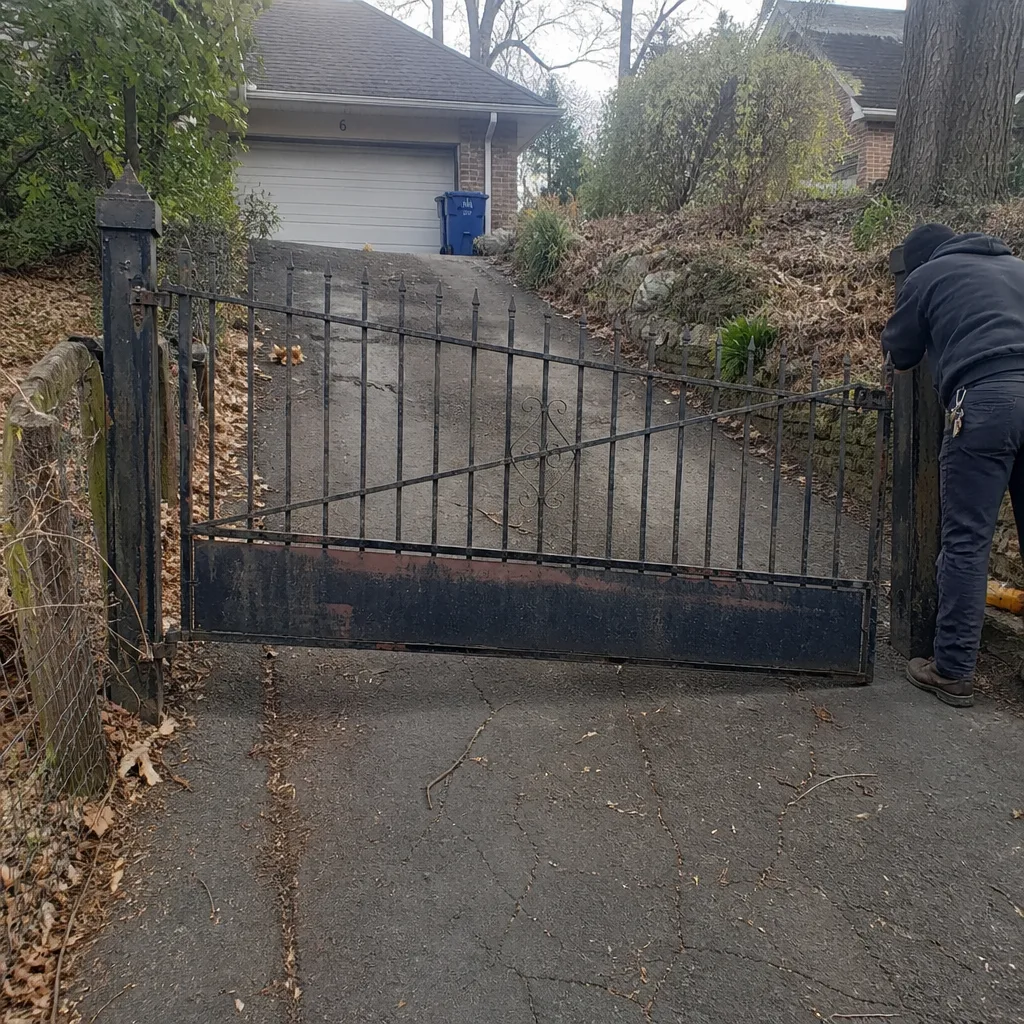 Before
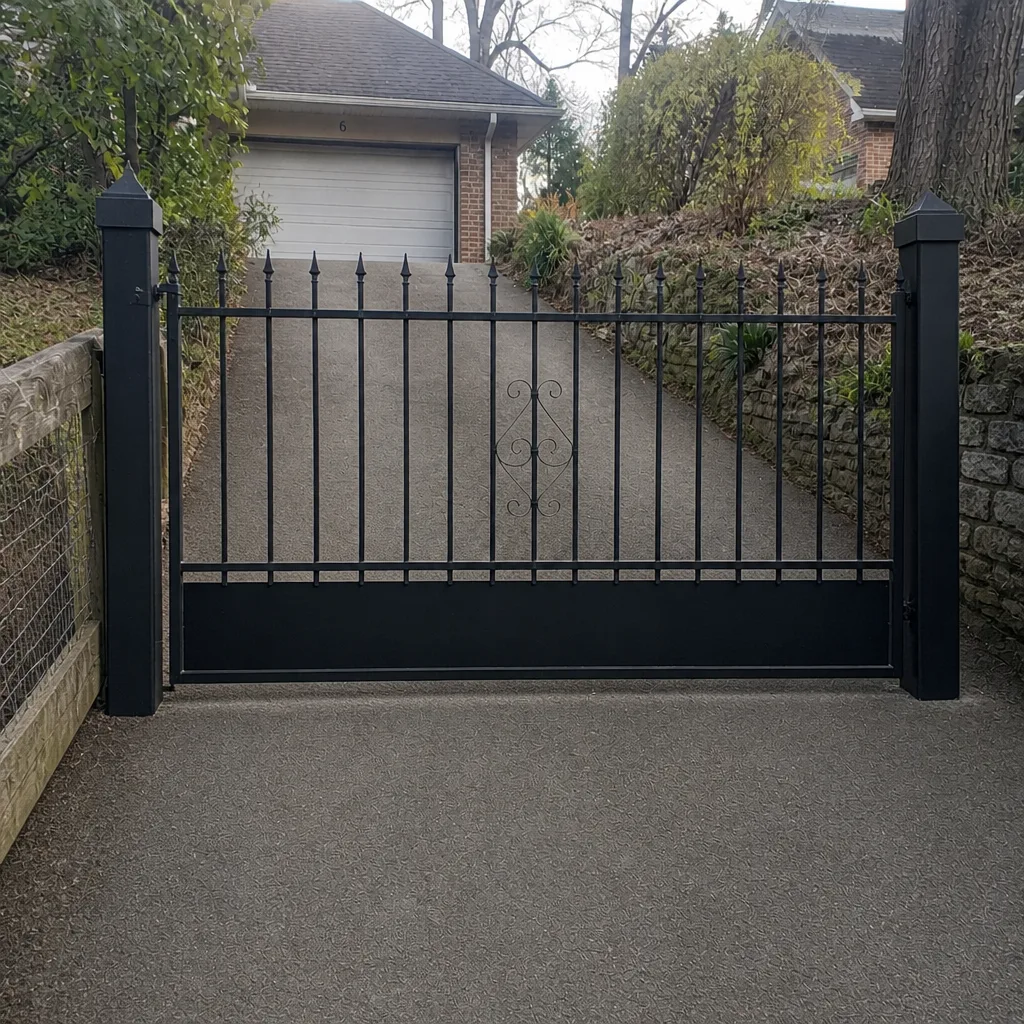 After
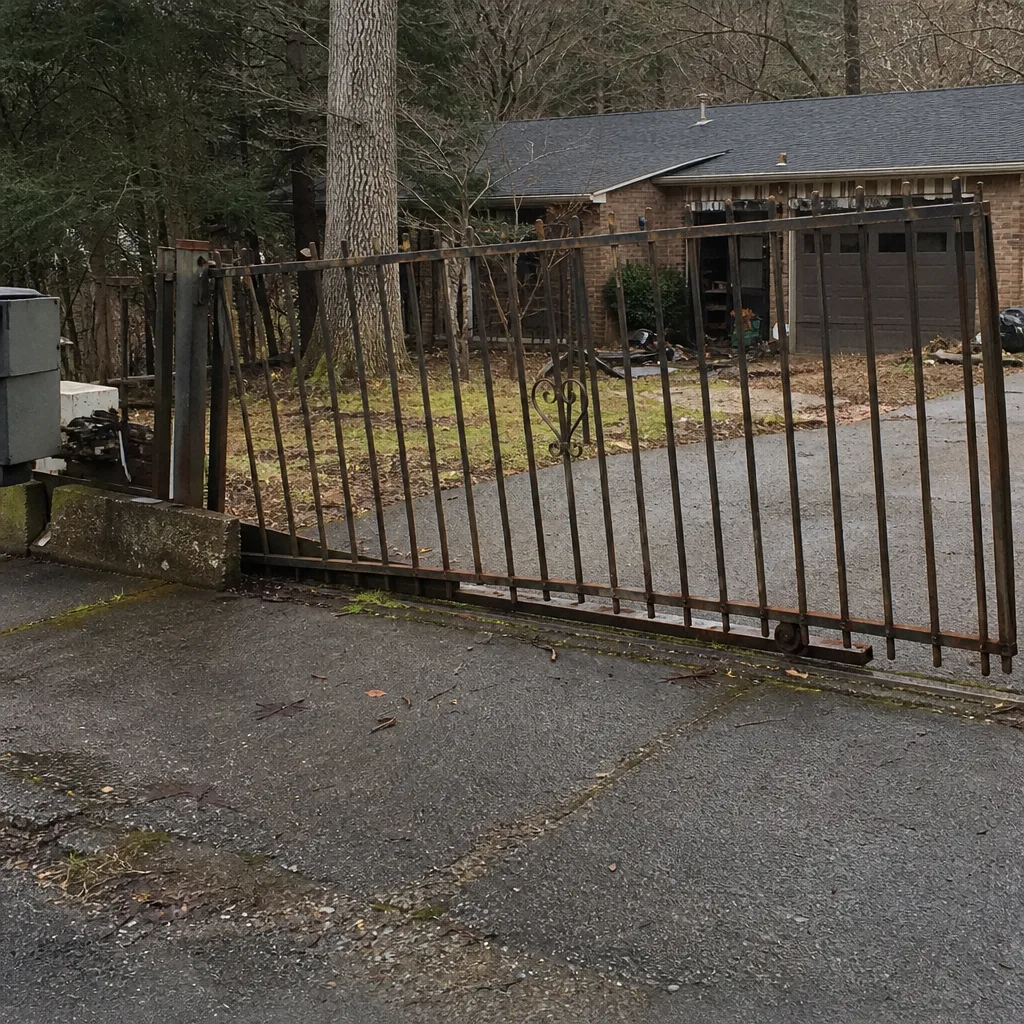 Before
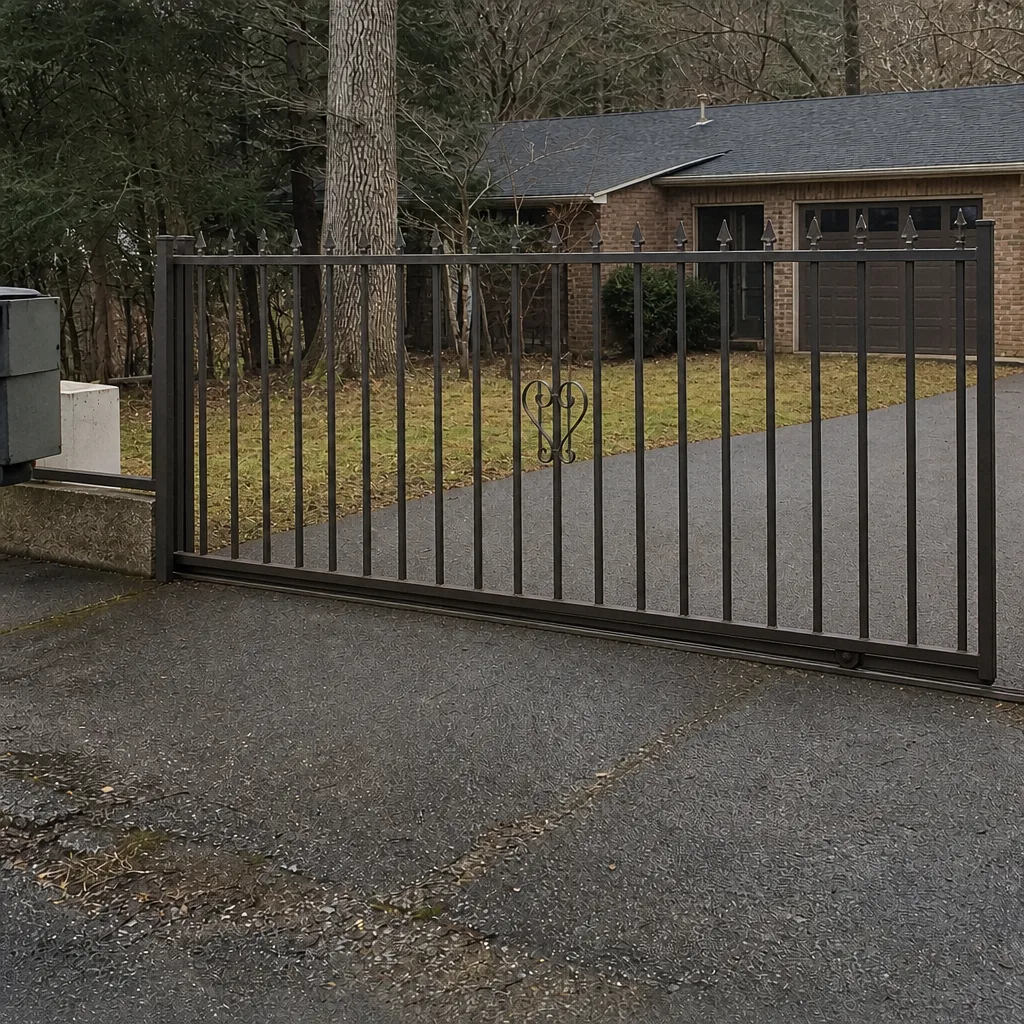 After
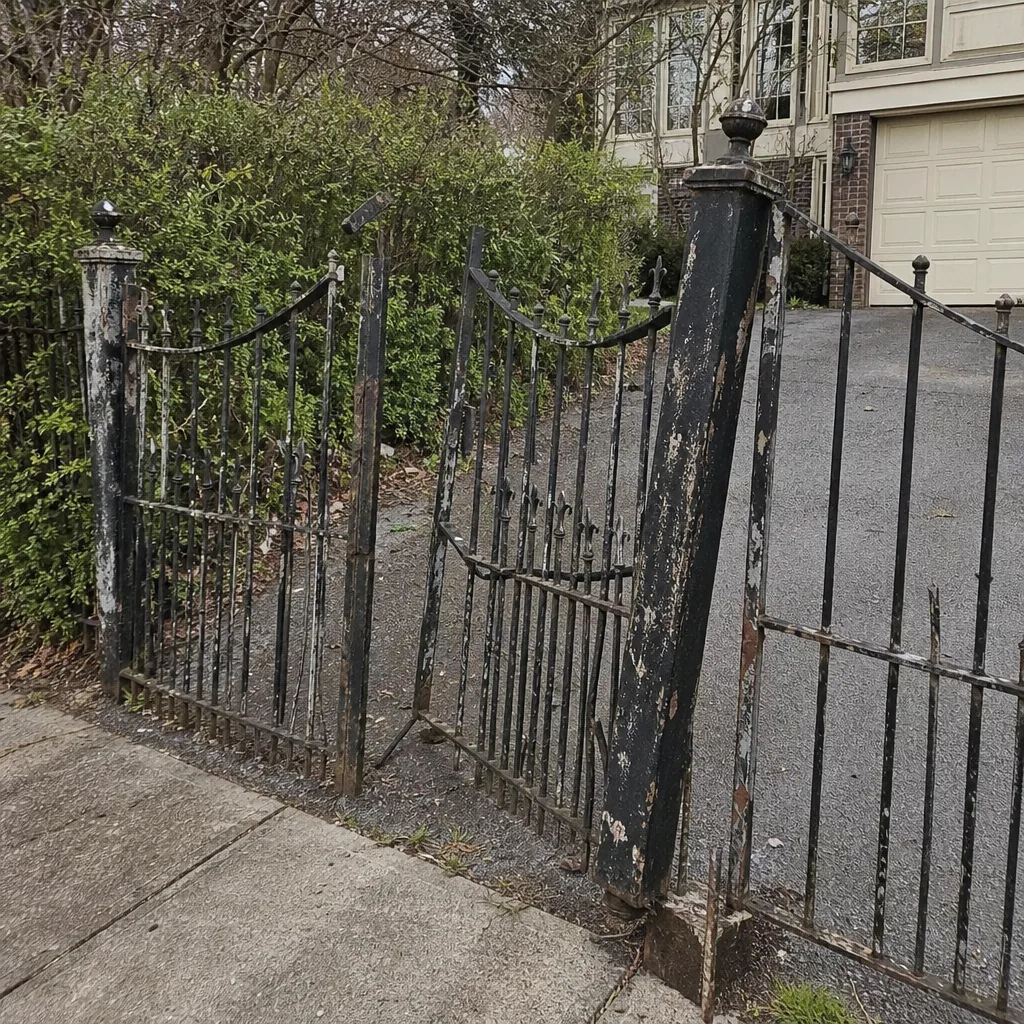 Before
 After
When to Call a Professional
Call a professional for any of the following: the gate is automated and the operator, sensors, limit switches, control board, or wiring are involved; the gate is access-controlled and any device on the system is misbehaving; a post is settling or the gate structure has shifted; the repair involves line-voltage electrical work; the gate is heavy or on a slope and the repair would require moving the panel; or the failure is intermittent and you can’t pin it down. Those cases are worth a professional look, and in many of them the professional look is the cheaper path once the wrong-parts cost is counted. Knoxville Gate Repair Co offers free estimates in Knoxville, and our technicians have up to 8 years of experience on both manual and automated systems. Call (877) 820-8549. We answer 24/7. Fast dispatch from 7am to 7pm, Sunday through Friday. If the failure is a genuine safety hazard, don’t wait.
Frequently Asked Questions
Yes, in most cases, as long as you’re only working on the hinge hardware and not the operator. Block or secure the gate, disengage the operator per the manufacturer’s manual if you need to move the panel, and replace the hinge with a matching part. If you’re unsure how to disengage the operator, get a professional to show you once, and then you’ll know for the next time. Call (877) 820-8549 if you want an on-site estimate instead.
No. A gate that reverses unexpectedly is almost always a safety-sensor or control-board fault, and those are professional territory. The tempting DIY move, realigning or disabling the sensors, removes the exact function that prevents a gate from closing on a vehicle. Get it diagnosed by a gate technician. Call (877) 820-8549 for a free estimate.
Line-voltage work on the circuit feeding your gate operator should be done by a licensed electrician in Tennessee. Low-voltage work on the control board, sensors, keypads, and accessories is gate-technician territory. The line between the two is the operator’s power supply. Ask before the work starts which side your repair falls on, and don’t attempt the line-voltage side yourself. Call (877) 820-8549 to talk through your system.
Gate repair pricing in Knoxville is set per job by a written estimate after a technician diagnoses the fault, so it varies with the system and the parts. Small mechanical repairs cost far less than operator or control-board repairs, and a free estimate will tell you exactly which category you’re in. Call (877) 820-8549 for an exact quote, and the price is agreed before any work starts.
That depends on your policy and your carrier, so ask them directly. In general, an unlicensed modification to a safety or electrical system creates a documented exposure that can complicate a liability claim after an injury or vehicle damage. The safest habit is to leave sensor, operator, and control-board work to a qualified gate technician, and keep records of every professional visit. Call (877) 820-8549 for a free estimate that documents the work.
For mechanical hardware on a manual gate, sometimes yes. For automated or access-controlled systems, a handyman without gate-system training usually can’t diagnose the operator, sensor, or control-board side. Most of the automated gate repairs we handle in Knoxville are ones a generalist has already looked at and couldn’t resolve. Call (877) 820-8549 to get a gate specialist on it.
The Bottom Line
The DIY-versus-professional decision comes down to system type and failure category, not skill level. Manual gate hardware (hinges, latches, handles, track cleaning) is reasonable homeowner work if you have the right tools, a second person for heavy panels, and you work safely. Automated and access-controlled systems are a different category: the operator, sensors, limit switches, control board, and any line-voltage wiring carry real electrical and liability exposure, and the safe answer is a professional. The cost math backs this up, because most DIY attempts on the operator side end up paying twice. Knoxville’s hillside lots and freeze-thaw cycles make structural and post problems especially common, and those are best diagnosed by a gate-system specialist. Knoxville Gate Repair Co services LiftMaster, FAAC, BFT, Linear, and five other major brands, from the hinge to the control board.
If you’ve read this far and you’re still not sure which side of the line your repair falls on, call us. We’ll tell you honestly whether it’s a homeowner job or a professional one. Call (877) 820-8549 for a free estimate. We answer 24/7. Fast dispatch from 7am to 7pm, Sunday through Friday.
Written by the team at Knoxville Gate Repair Co.