
Last updated November 25, 2026
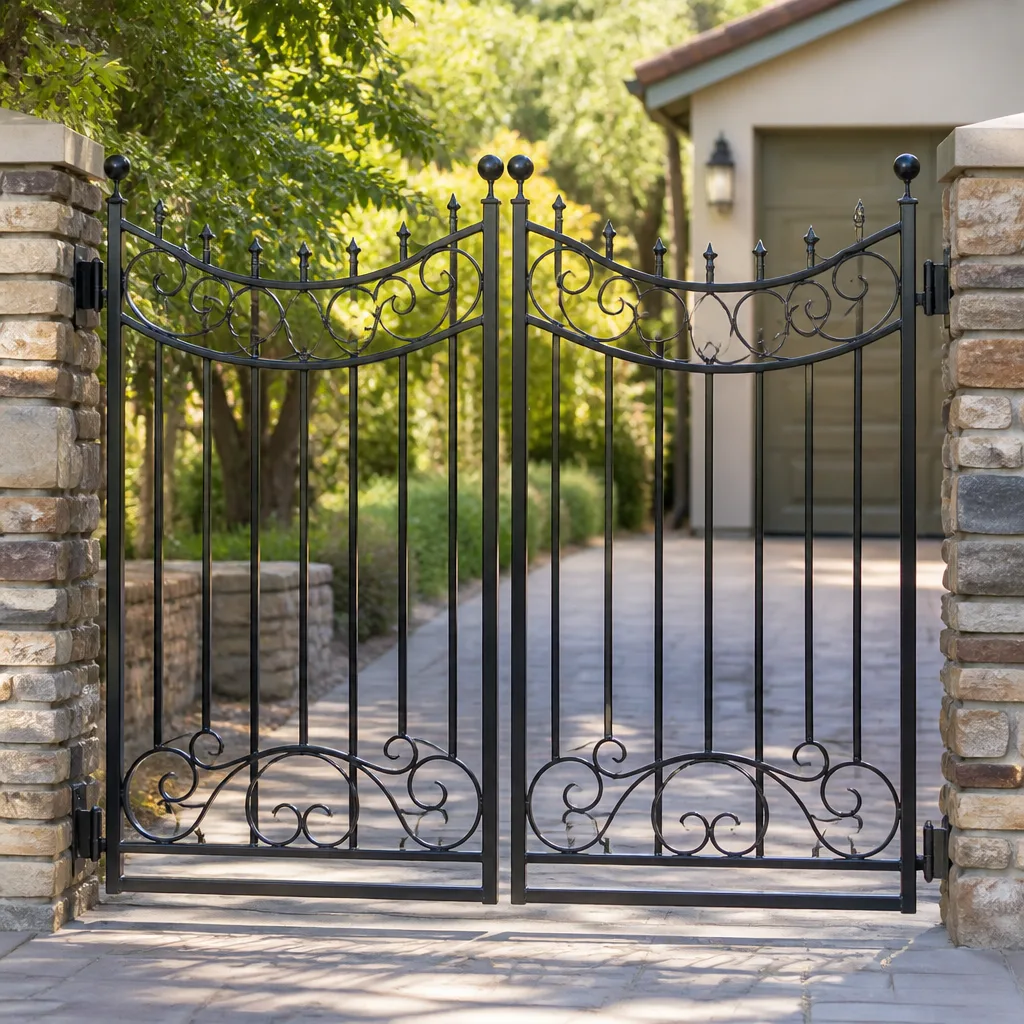 Wrought iron
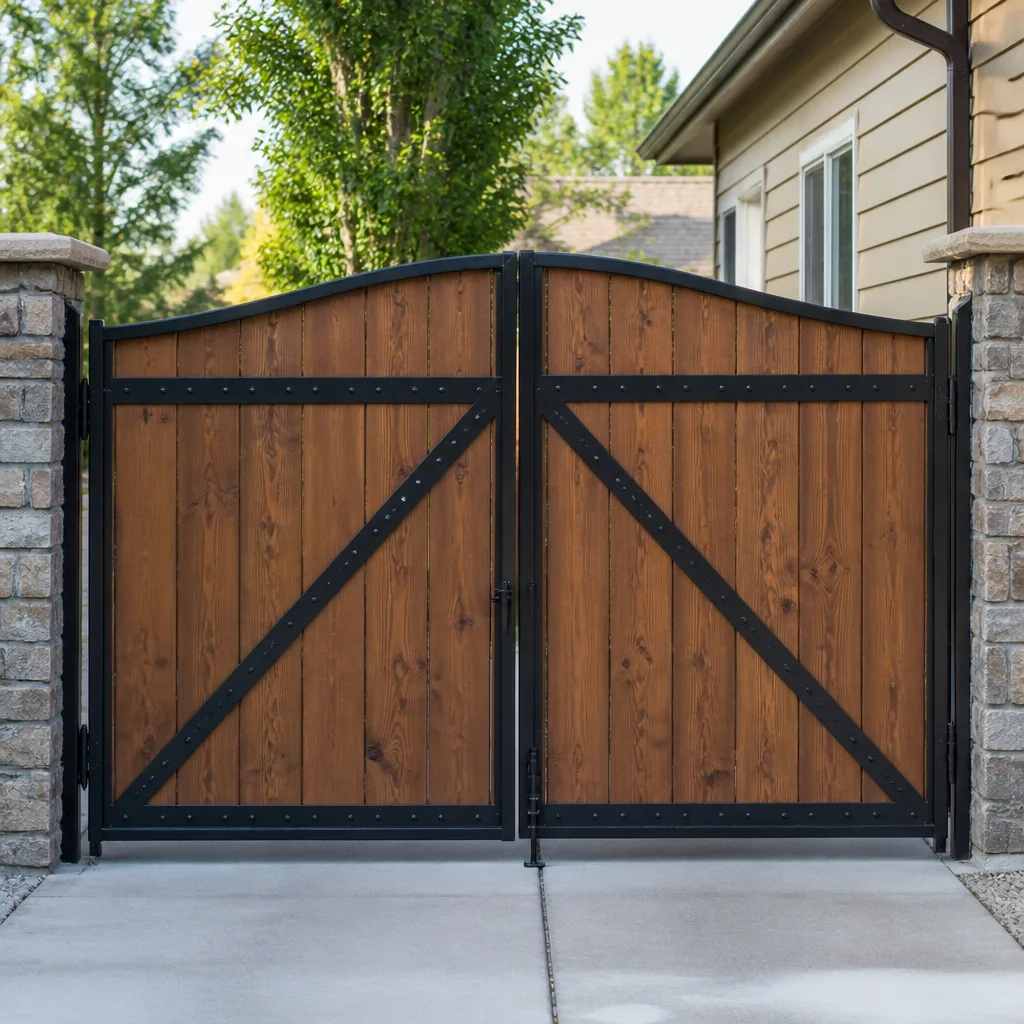 Wood & steel frame
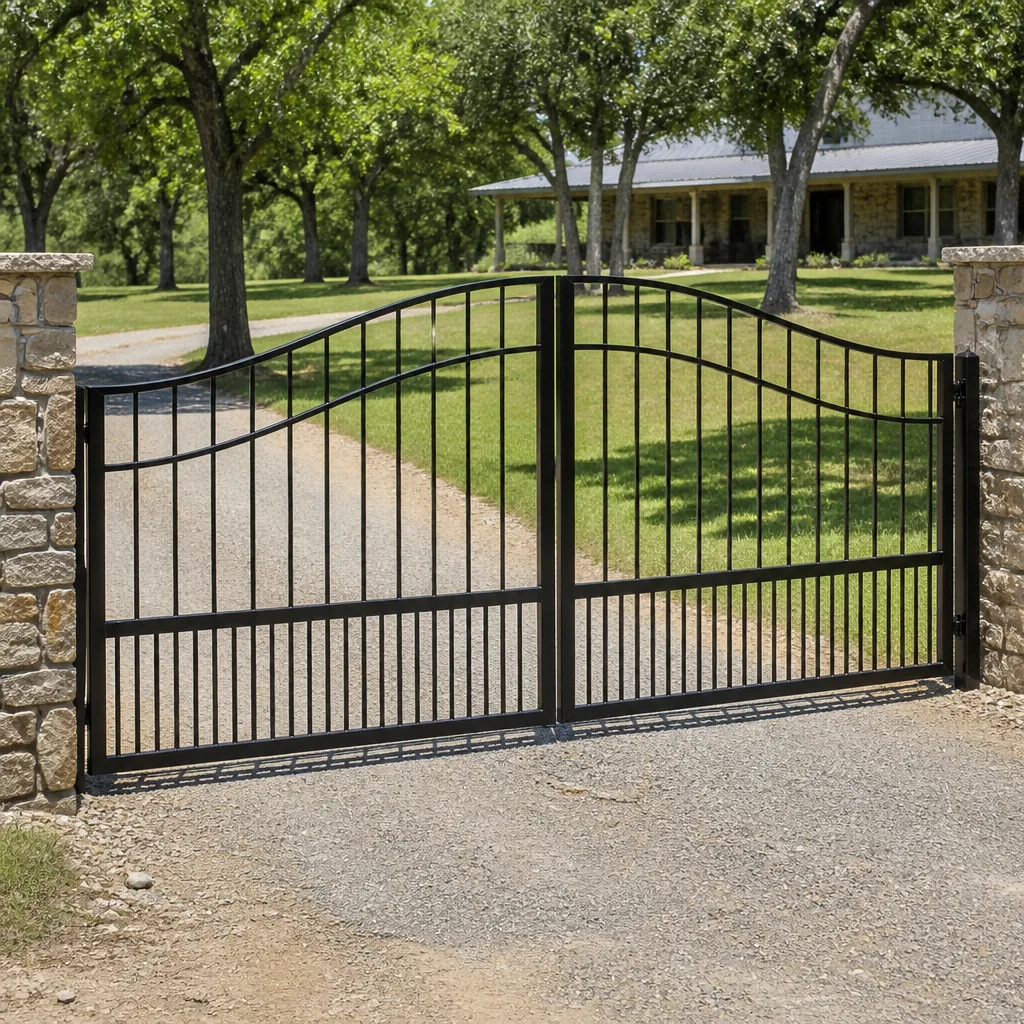 Farm & ranch
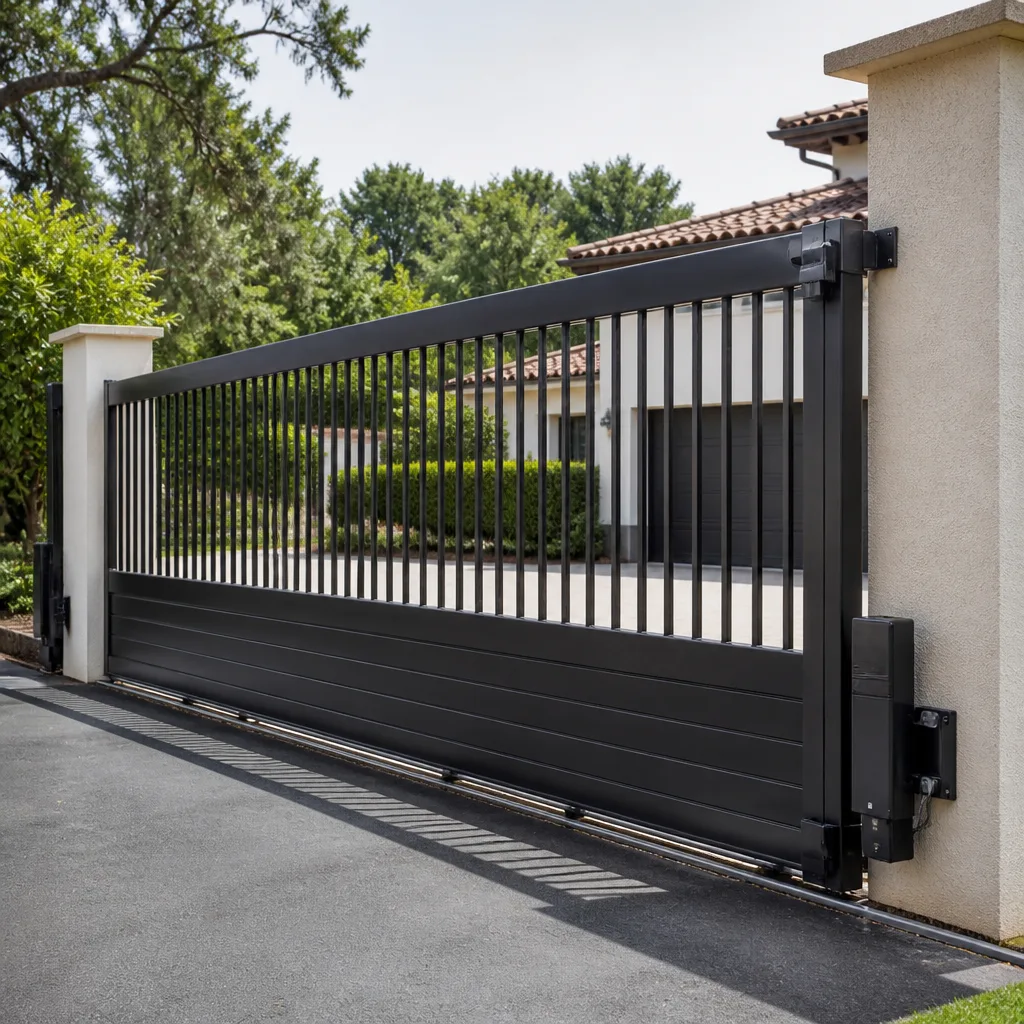 Sliding driveway gates
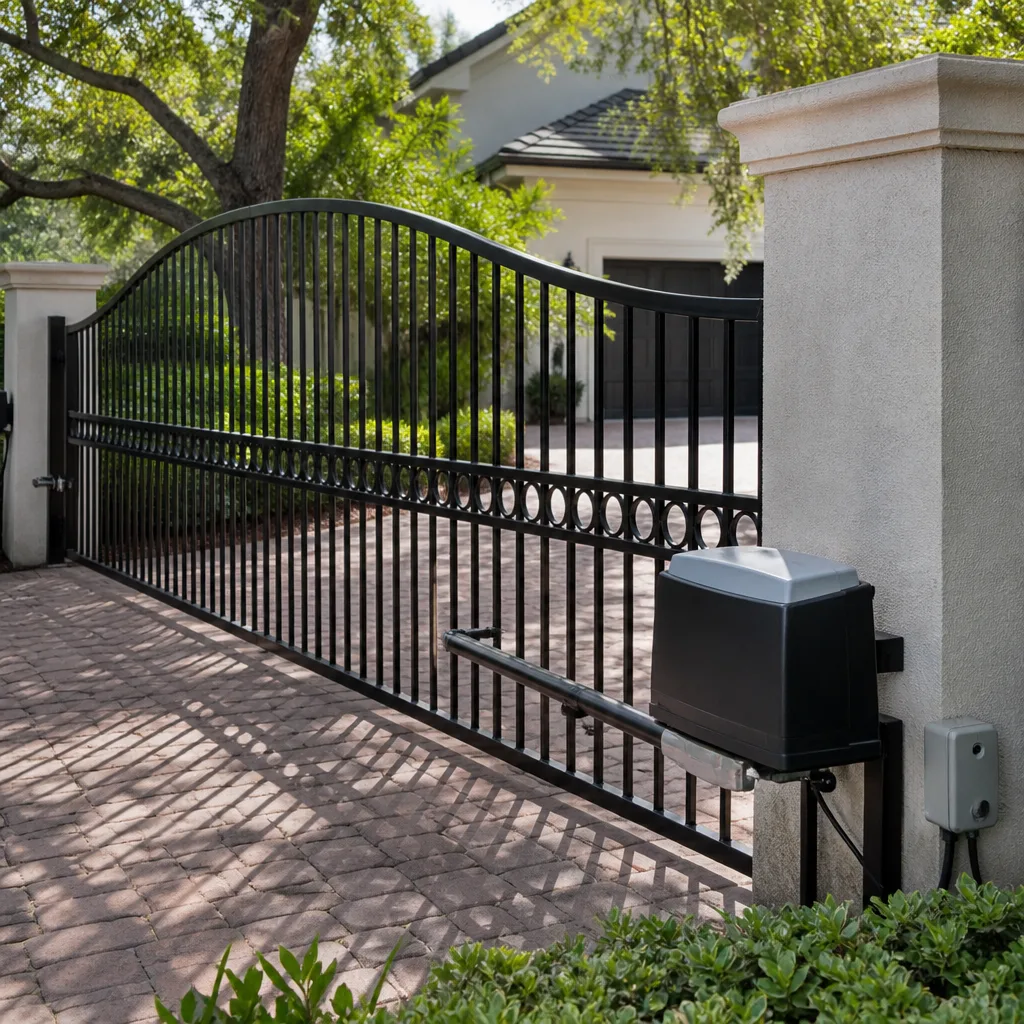 LiftMaster operators
Free on-site gate assessment - hinges, posts, and your LiftMaster or Nice gate operator checked before anything is quoted
The assessment is free and the quote is the invoice.
Get your free estimateHow to Hire a Gate Repair Contractor in Knoxville: A Step-by-Step Guide
The wrong gate contractor rarely shows up as an obvious mistake on day one. It usually looks like a low quote, a quick fix, and a gate that runs fine for about sixty days before the same failure comes back. By then the cheap quote has cost more than the careful one would have. Here’s the thing most homeowners miss: an automated gate fails at the level of a specific component, and the contractor who can name that component before touching a wrench is the one who fixes it once. This guide walks you through the vetting questions, the paperwork, and the red flags that separate a dedicated gate specialist from a generalist guessing his way through a Knoxville gate system.
Quick Answer
To hire a gate repair contractor in Knoxville, verify three things before you book: that the company works on gates as a specialty (not as a sideline to fencing or handyman work), that they can name the specific brand and control board on your gate, and that they walk the property and perform a real diagnostic before writing a quote. Ask for licensing and insurance in writing, insist on brand-specific parts listed by name, and get a written agreement that covers a return visit on the same failure. A free estimate from a gate specialist who answers those questions correctly is worth more than a lower number from someone who can’t.
Styles & brands we work with
- Wrought iron
- Wood & steel frame
- Farm & ranch
- Sliding driveway gates
- LiftMaster operators
Table of Contents
- Gate Specialist vs. Fence Company That “Also Does Gates”
- Five Interview Questions That Reveal Real Expertise
- Licensing and Insurance in Tennessee: What to Ask For in Writing
- Red Flags in a Gate Repair Quote
- How to Structure a Service Agreement for Follow-Up Work
- A Component Walkthrough of a Modern Automated Gate
- The Seven-Step Hiring Process
- When to Call a Professional
Gate Specialist vs. Fence Company That “Also Does Gates”
A fence company builds and repairs fences. A gate specialist diagnoses the gate as a system: the mechanical hinge and latch, the operator motor, the control board, the safety sensors, and the access-control electronics that tie it all together. Those are two different skill sets, and on an automated gate the difference shows up fast. A fence installer knows how to hang a panel plumb. He may not know why a LiftMaster operator throws a fault code the moment the temperature drops below forty degrees, or why a DoorKing telephone entry system loses its dial tone after a power blip.
In Knoxville, the gap matters more than in a town where most gates are manual and simple. The market here has a real mix: older neighborhoods with manual swing gates, newer subdivisions with automated swing and slide systems, and commercial properties with high-cycle commercial operators running dozens of cycles a day. When a gate controller starts behaving badly, the call is either a gate technician who reads the control board or a generalist who starts swapping parts by trial and error. Guesswork gets expensive.
Here’s a question worth asking every contractor you consider: which gate brands do you carry parts for, and which ones do you know the control boards on? A gate specialist will name the brands he actually works with. Our technicians are familiar with nine major manufacturers, from residential lines like Ghost Controls and Mighty Mule up to commercial and high-cycle equipment from FAAC, BFT, and DoorKing. That’s not a sales list. It’s a working knowledge of how those specific units fail and how their parts are sourced.
If a contractor describes himself as a fence company that “also does gates,” ask what percentage of his week is spent on gates and gate operators. If the answer is vague, that tells you where the gate sits in his business. The point isn’t to disqualify anyone with a fence background, it’s to make sure the person diagnosing your gate actually diagnoses gates every week. As a Knoxville Gate Repair Co team, we can tell you that the customers who call us after a bad experience almost always hired on price and got a fix that didn’t hold.
Five Interview Questions That Reveal Real Expertise
Any contractor can talk confidently about “gate repair.” The way to find out whether he actually knows the equipment is to ask questions that can’t be answered with a generic script. These five will sort the specialists from the generalists in under ten minutes:
- What are the two most common failure modes on my specific operator brand? A specialist names them without hedging. On a residential Ghost Controls or Mighty Mule unit, expect a discussion of battery and solar charge issues in cold snaps and limit-switch drift. On a commercial LiftMaster or DoorKing operator, expect a real answer about high-cycle wear and control-board faults.
- How do you read a fault code on my controller? If the contractor describes pulling the diagnostic code and matching it to the manufacturer’s fault table, he knows the system. If he shrugs and says he’ll “test it,” dig deeper.
- What safety devices does my gate have, and how do you test them? Every automated gate needs functioning safety edges or photo-eye sensors. A specialist will tell you exactly which type is on your gate and how he verifies it. A generalist often doesn’t know the gate has them.
- Do you service access-control hardware, or only the operators? On a residential gate, access control might be a keypad and a remote receiver. On a commercial or gated-entry property in Knoxville, it could be an intercom, a telephone entry system, or a fob reader. A true specialist handles both the mechanical gate and the electronics behind it. If the answer is “we’ll call someone for the entry system,” you’re about to hire two contractors.
- When you order a part, what do you need before you can order it? A gate specialist asks for the model and serial number on the operator label and the exact part. A generalist says he’ll “match it up at the supply house.” Matching a control board by looks is how the wrong board ends up in your housing.
Ask the questions in order and pay attention to how quickly the answers come. That hesitation you notice on the second question is usually the truth. If your operator is a brand like LiftMaster or DoorKing, the answer should be immediate. If it isn’t, move on.
Licensing and Insurance in Tennessee: What to Ask For in Writing
Tennessee handles contractor licensing differently depending on the scope of work and where in the state the job sits. Gate repair is not the same animal as new construction or a large electrical installation, and the rules can vary by the type of work and the dollar value involved. The safest approach is to ask the contractor, in writing, to state the license or registration under which he operates and whether any portion of the work requires a permit from the City of Knoxville or Knox County. If he can’t tell you, that’s a problem.
What to request in writing before any work begins:
- A certificate of general liability insurance with the policy still active and the coverage limits visible.
- Workers’ compensation coverage, or a clear statement of how the contractor handles injuries on your property.
- The contractor’s state license or registration number, if the scope of work requires one.
- A written statement of which permits, if any, are needed for your specific job and who will pull them.
- A written scope of work that names the parts and labor, not a lump-sum guess.
Read the insurance certificate yourself. Don’t take a photo of a business card as proof. The certificate should carry the contractor’s name, and the dates should cover the day the work is scheduled. If the certificate has expired or names someone else, ask for a current one.
One more thing specific to gate work: electrical. An automated gate has a power run, a transformer, and often a low-voltage control circuit. If the job involves running new conduit or wiring a circuit for the operator, ask how the contractor handles the electrical permit. Some jobs need to be pulled by a licensed electrician. A specialist will tell you which parts of the job he performs himself and which he coordinates with anyone else. Get that in writing too.
If you’re comparing several contractors, put the paperwork on the same standard. Anyone who hesitates to put licensing and insurance in writing is telling you something. Our own practice is to confirm the local professional is licensed and insured as the state requires before we book the job.
Red Flags in a Gate Repair Quote
A gate repair quote should read like a short technical document, not a bar napkin. The strongest signal of a professional is specificity: part names, model numbers, labor separated from parts, and a clear diagnosis of the failure. Here are the red flags to watch for:
- Vague line items. “Fix gate opener” or “adjust gate” tells you nothing. A real quote names the operator model, the part that failed, and what the diagnosis was.
- No brand-specific parts listed. If your gate has a LiftMaster operator and the quote says “replacement motor,” ask which motor and for what model. If the contractor can’t name it, the part he’s ordering might not fit.
- “Repair or replace” language with no diagnostic step. A quote that offers two paths but skips the diagnosis is a coin flip. Ask what diagnostic test determines which path is needed and what the test measures.
- A quote written before the gate was even opened. If the contractor never lifted the control housing cover or tested the safety edges, how does he know what’s wrong? Walk the gate with him and watch what gets inspected.
- No model or serial number captured. Every operator has a label with the model and serial. A serious contractor writes them down on the first visit. That’s how the correct parts get ordered and how the next service call gets fast-tracked.
- An unusually low quote with no diagnosis listed. In Knoxville, the residential gate market has enough automated installations that a suspiciously low quote usually means a generalist expecting a simple manual-gate job and finding a control board. The price grows once he’s on site.
- No mention of safety devices. A gate quote that says nothing about safety edges, photo-eyes, or reversing sensors is missing a big part of the repair. Those parts need to be tested and, if failed, replaced.
Any one of these on its own is a question to ask. Two or three together is a quote worth walking away from.
How to Structure a Service Agreement for Follow-Up Work
If the first repair doesn’t hold, who pays for the return visit? That’s the question the rep and the quote usually skip, and it’s the one that saves you money when the same failure comes back a month later. The service agreement should answer it before the work begins.
Ask for these terms in writing:
- A defined warranty on the repair labor. Specify the number of days or the length of time the work is covered. Ask explicitly whether the warranty applies to the exact same failure.
- A defined warranty on parts. Some components come with a manufacturer’s warranty. Ask for the length and the terms in the quote.
- A return-visit clause for the same failure. The clearest form: if the same problem comes back within the warranty period, the return visit carries no diagnostic charge. Get the sentence written.
- A statement of what’s excluded. If the gate fails because a tree limb drops onto it, that’s not the same as the earlier failure. Reasonable terms carve out a new cause and only waive the return charge for the original problem.
- A clear photo or written record of what was fixed. A photo of the replaced board or a written note with the model and serial makes any follow-up faster and easier to authorize.
We’d also suggest you ask the contractor to log the operator’s model and serial in the agreement. If the follow-up involves a different technician, he’ll still have what he needs. A one-time gate repair written on a napkin is hard to enforce. A written agreement is enforceable.
A Component Walkthrough of a Modern Automated Gate
The easiest way to hold a contractor accountable is to know what’s in your gate. Every automated gate is a stack of parts, and each one can fail on its own. Once you understand the stack, you’ll hear a diagnosis that makes sense, and you’ll spot a vague one.
Start at the physical side:
- The hinge and mounting points. Sagging, wobble, and grinding usually start here. The gate hangs from the hinge, so worn hinges put uneven force on the operator.
- The gate panel and frame. Older panels can warp, and later repairs sometimes leave the gate out of square. An out-of-square gate misaligns the operator’s travel.
- The latch and roller assembly. On a slide gate, rollers wear and the panel drops, then drags. On a swing gate, the latch and stop points need to be set precisely.
- The track or guide. On a slide gate, the track and rollers must be aligned. A misaligned track causes the operator to fight the gate.
Now the electrical and electronic side:
- The operator motor and gearbox. This is the part that does the work. Different brands fail differently, which is why knowing the brand matters. A commercial FAAC or BFT operator running dozens of cycles a day wears differently than a residential Ghost Controls or Mighty Mule unit.
- The control board. The brain of the operator. It reads the limit switches, the safety devices, and the remote signal, then sends the motor the go-ahead to run.
- The power supply and transformer. A low-voltage supply is vulnerable to surges and to the power hiccups that come with Knoxville’s summer storms.
- The safety edges and photo-eyes. These are the devices that tell the gate to stop or reverse if someone is in the path. If they fail, the gate often refuses to operate at all on a modern control board. That’s a safety feature, not a bug.
- The access-control layer. Keypads, radio receivers, intercoms, telephone entry systems (DoorKing makes these), fobs, and app modules. This is the layer most generalists skip, and it’s also where a lot of “the gate won’t open” complaints actually live. The gate mechanism is fine. The entry system isn’t getting the signal through.
When a technician walks your gate, ask what he’s checking and listen for these systems. If he only looks at the motor and calls it good, he’s missing half the stack.
The Seven-Step Hiring Process
Hiring a gate specialist doesn’t have to be a long negotiation. Here’s the process in the order we’d do it:
- Get your operator’s model and serial. The label is usually inside the housing or on the rear of the operator body. Note the brand while you’re there. This one step turns a vague phone call into a real conversation.
- Call at least two contractors. One should be a gate specialist. The other can be whoever you were going to call first. The comparison is the point.
- Ask the five interview questions. You’ve got them above. Ask them on the phone if you can. The hesitation on the second question tells you a lot.
- Book a free estimate with a diagnostic walk. Walk the gate with the contractor. Watch whether the housing comes off, whether the safety devices get tested, and whether the model and serial get written down.
- Get the quote in writing with parts named. If it lists a part, you should be able to read the part name, the model, and the brand.
- Confirm licensing and insurance. Certificates before work starts, not after.
- Agree on the warranty and the return-visit terms in writing. This is the part most people skip, and it’s the one that protects you when the same failure shows up in a month.
If you’re at the stage of replacing rather than repairing, the process is very similar, with one addition: ask about the actuator, the operator, and the access-control plan together. A new gate installation needs all three decisions made at once, otherwise you end up with a great gate that can’t be opened by your keypad.
Why Knoxville Properties Ask Different Questions
Knoxville’s climate makes gate systems fail in specific ways. Hot, sticky summers push electric operators hard. The enamel and paint on older steel gates fade faster in the summer sun. Freezes in winter can stiffen grease in hinge points and freeze the metal surfaces of slide-gate tracks. Repeated wet-dry cycles expand the soil around the gate posts, and a post that was set properly can shift slightly over time, which throws a swing gate out of alignment. Add in the trees across much of Knoxville, and fallen limbs and leaf buildup in tracks are a regular cause of failure.
What that means for a hire: ask the contractor how he handles winter cold-snap failures, post-shifting alignment, and debris in tracks. A generalist who mostly installs fences in the spring has usually seen one or two of these. A gate specialist has seen them recurrently. Our technicians have up to 8 years of experience with exactly these failures across Knoxville and the surrounding area.
If your gate is fully automated, the electrical and electronics side needs even more attention than the mechanical side. A gate motor & opener is often the first component to fail after a summer of hard cycling, and the access-control layer behind it fails differently again. When you hire, ask how the contractor diagnoses both. The best diagnostic sequence is control board first, then safety devices, then the mechanical gate. That order catches the most common failure patterns quickly.
One safety note that applies to any automated gate: the power supply and the operator’s internal wiring can hurt you if you’re not trained to work on it. The safety edges and photo-eyes are there because a heavy panel in motion can do serious damage. That’s why we recommend a trained professional for anything beyond opening the housing cover to read the model and serial. Reading the label is safe. Diagnosing inside the housing is not.
If you’re thinking about adding access control or security integration to an existing gate, ask the contractor about that separately. Access control on an automated gate involves its own set of skills: keypads, radio receivers, intercoms, telephone entry systems, and the wiring that ties them to the operator. A gate specialist who can handle both the mechanical gate and the electronics behind it is the one you want for the full job.
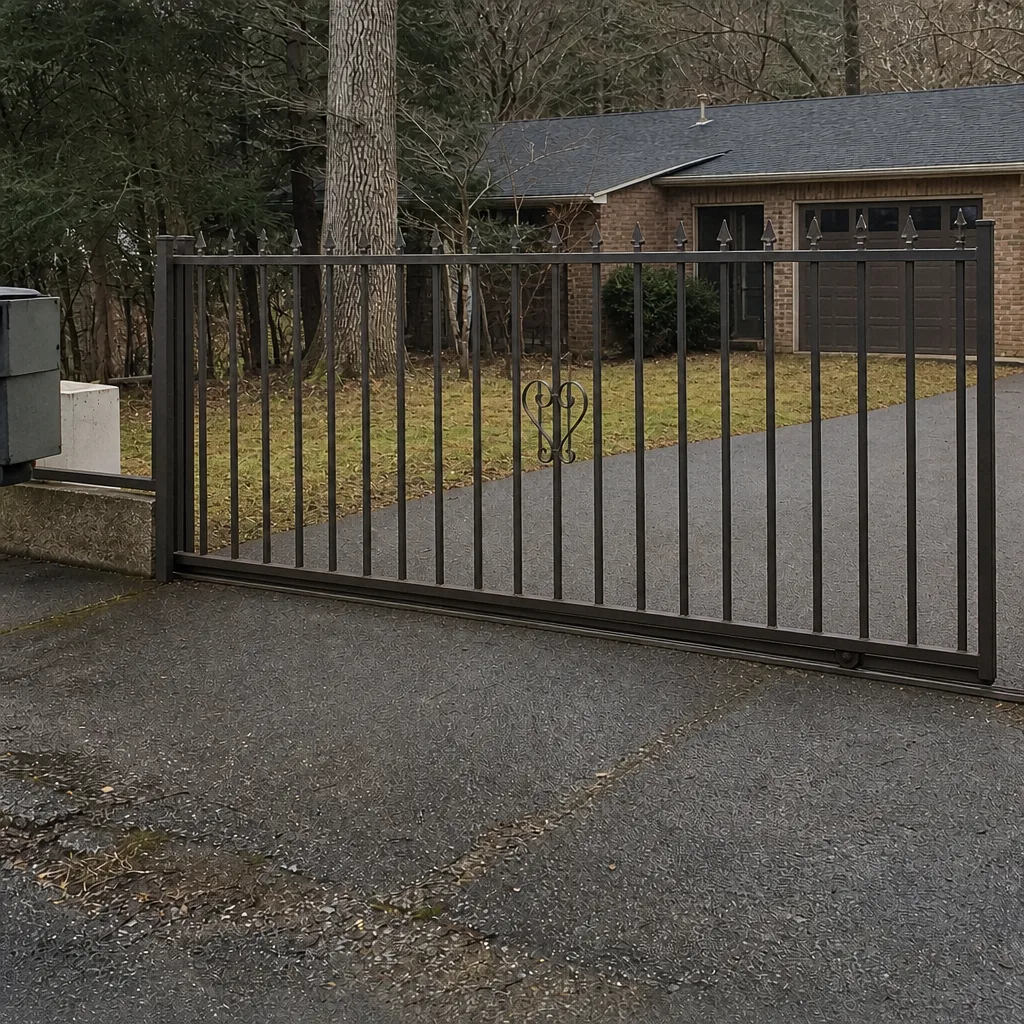
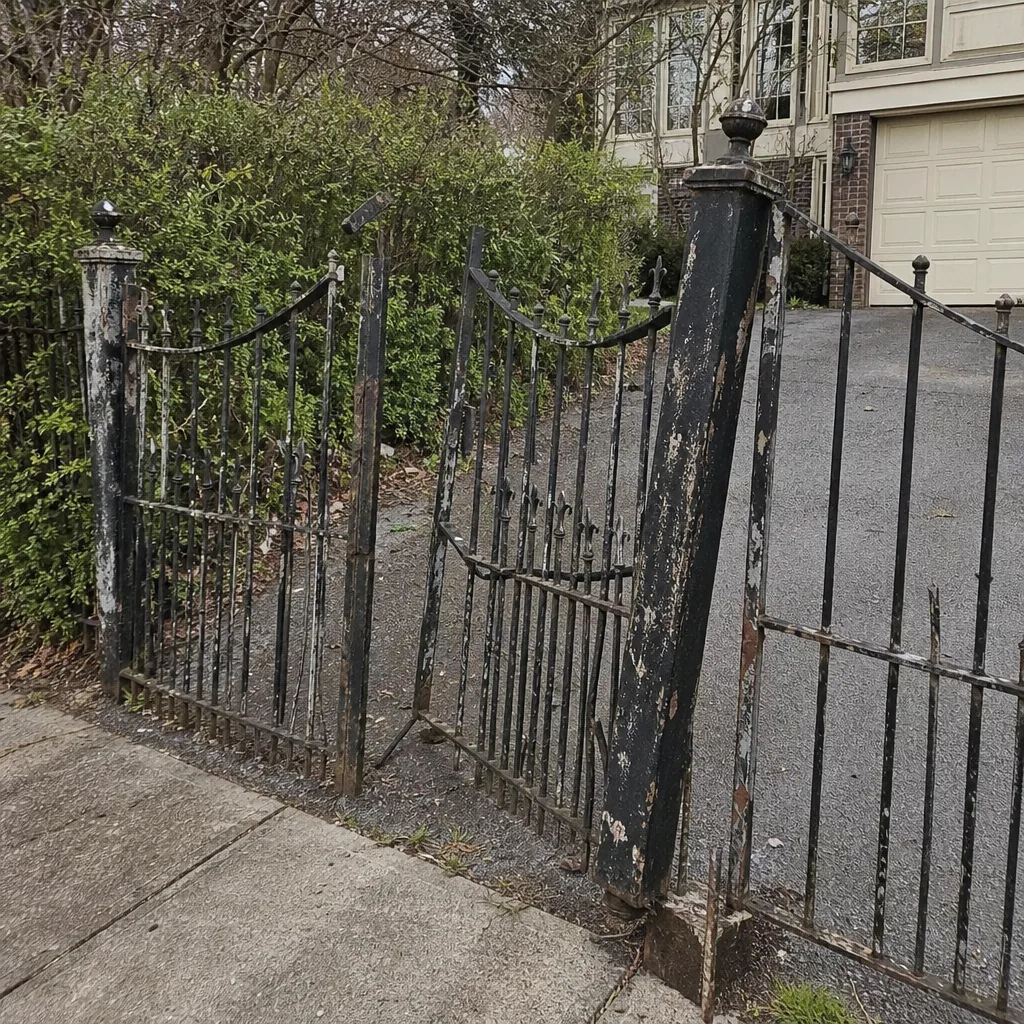
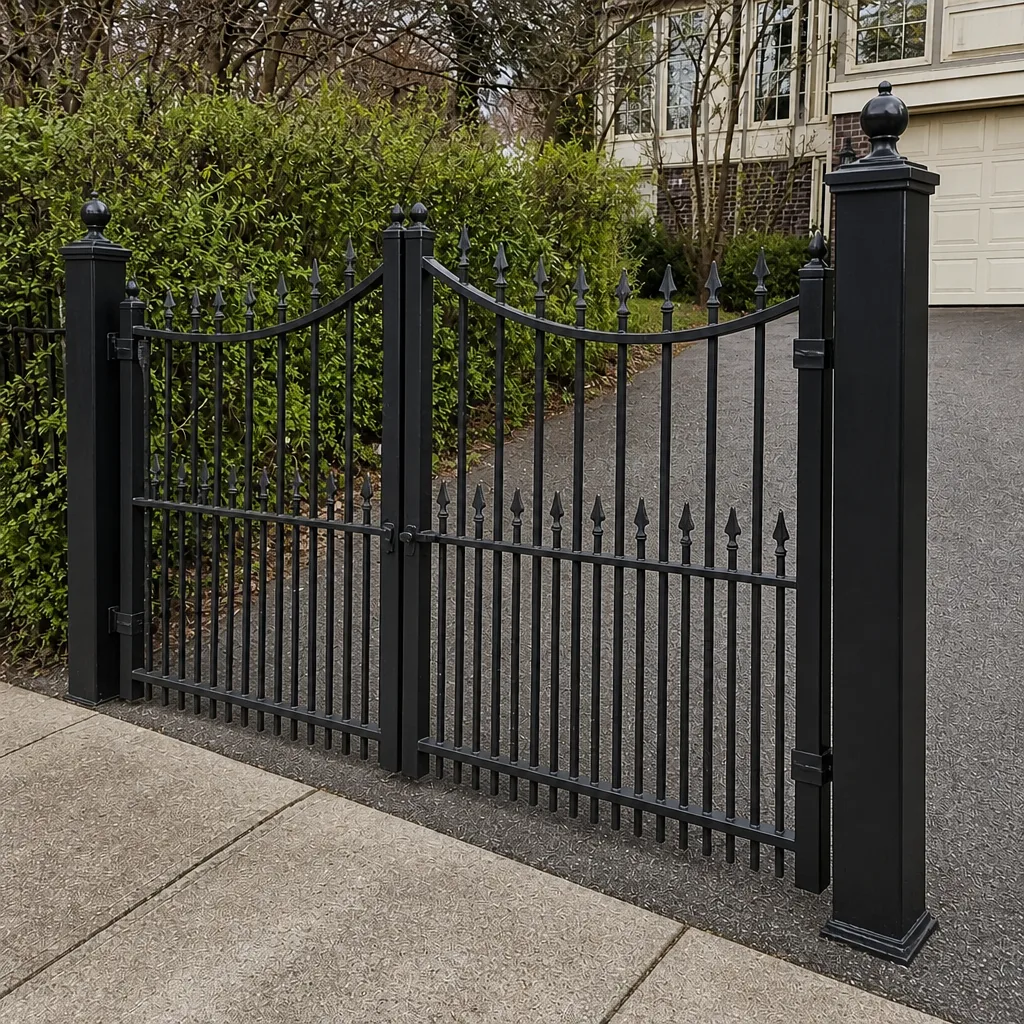
See the difference
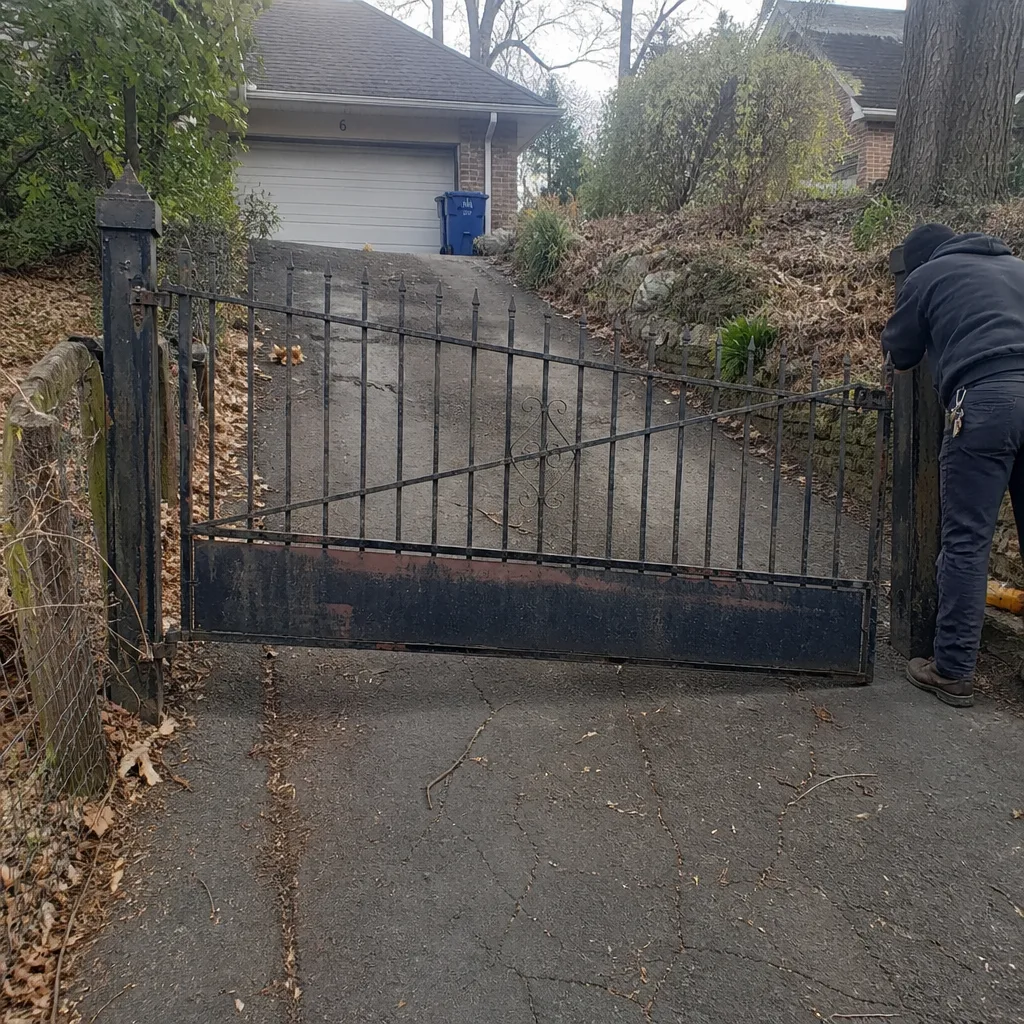 Before
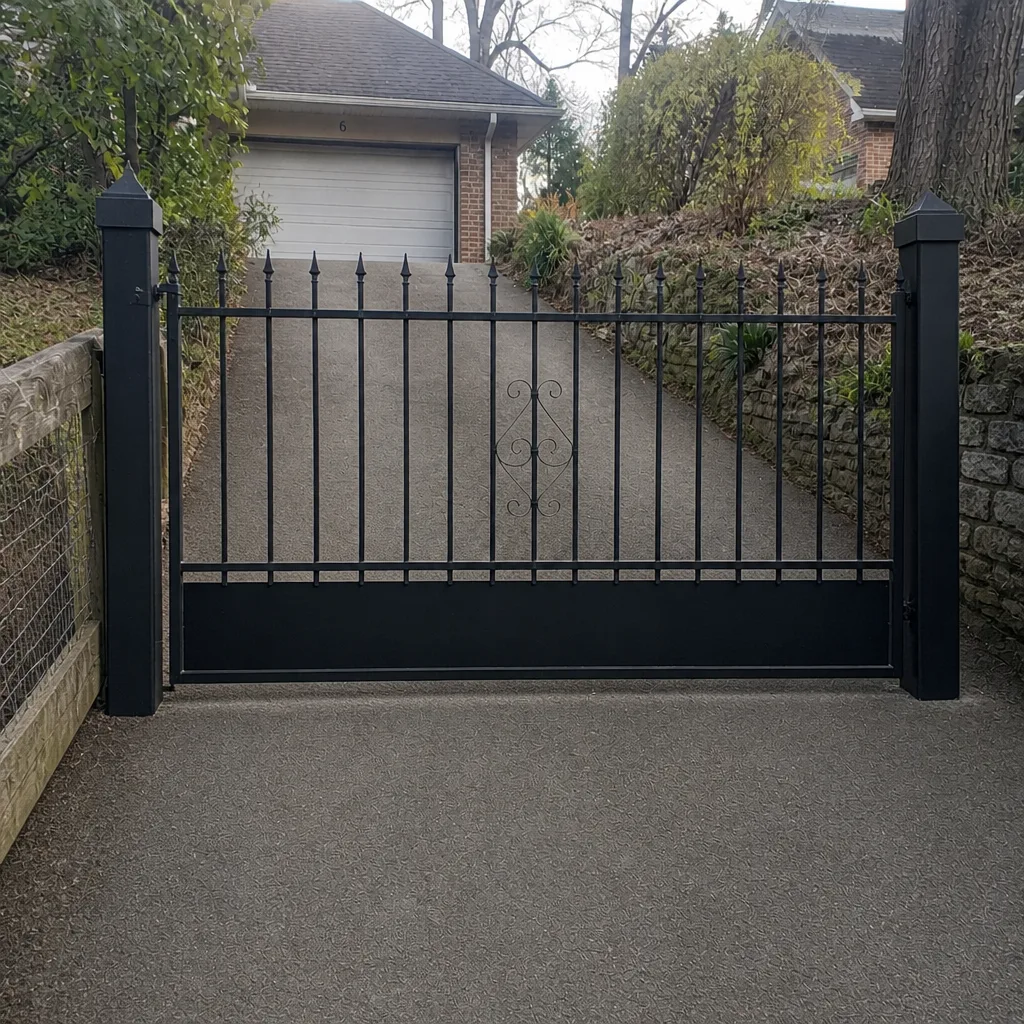 After
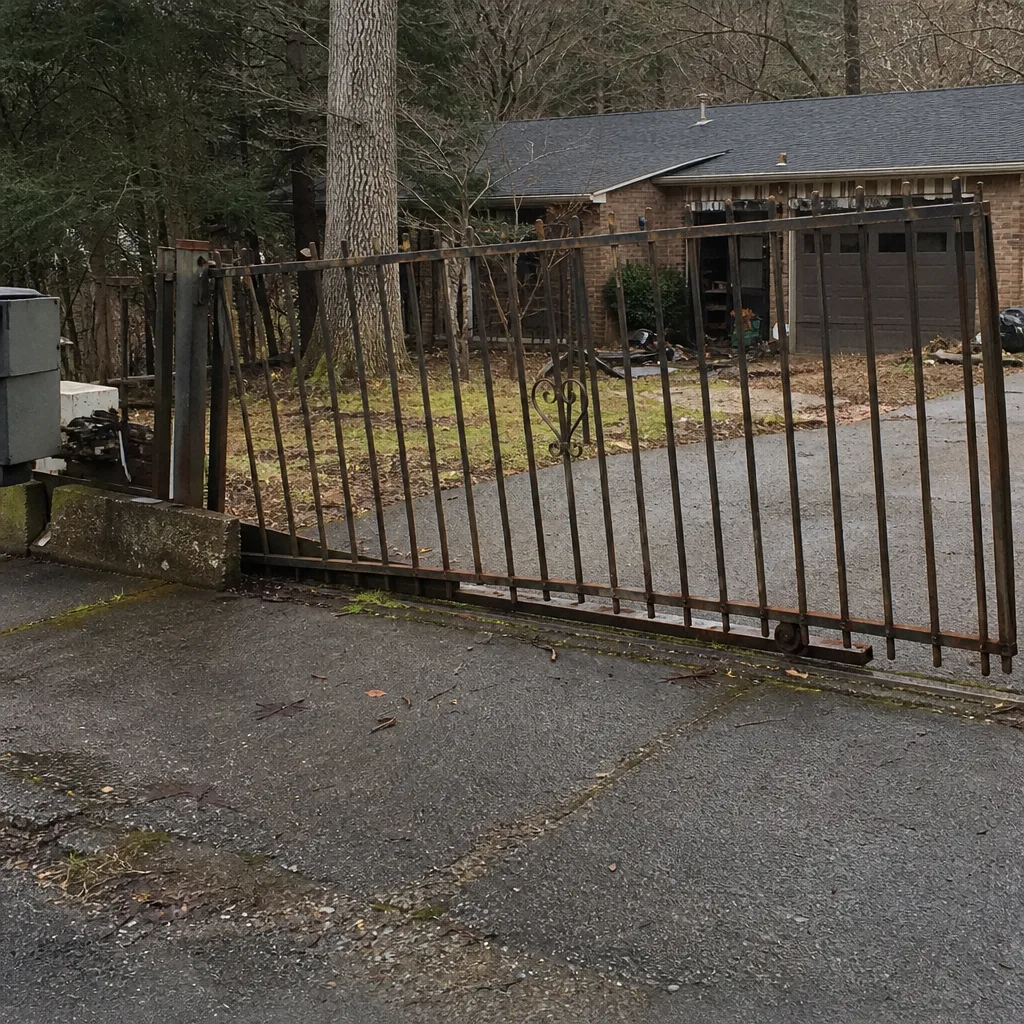 Before
 After
 Before
 After
Common Mistakes to Avoid
- Hiring on price alone. A quote that comes in well below the others usually has a reason: no diagnostic step, no brand-specific parts, or a generalist expecting a simpler job. Ask what’s missing before you book.
- Skipping the on-site diagnostic because the phone call sounded confident. Confidence over the phone is easy. A walk of the gate with a housing cover off and safety devices tested is where the real diagnostic happens.
- Letting a generalist order a replacement part without the model and serial. The wrong control board is expensive and, in a lot of cases, non-returnable. Get the model and serial written down before anyone orders anything.
- Forgetting to ask about the access-control side. Many Knoxville properties with electronic entry rely on keypads, fobs, or intercoms. If the contractor only handles the operator, you’ll be chasing a second call.
- Signing off on a repair with no written warranty. The same failure returning in a month shouldn’t mean another full quote. Get the return-visit terms in writing.
- Ignoring the safety devices. A gate that “works” but doesn’t reverse when it hits something is a hazard. Ask explicitly that the safety edges and photo-eyes be tested and replaced if failed.
- Assuming a low-voltage operator has no permitting requirements. Depending on the scope of the work, a permit may be required, and the power run to the operator may need a licensed electrician. Ask the city’s building department about the specifics for your job, or have the contractor confirm in writing.
When to Call a Professional
Some gate problems are safe to watch and diagnose yourself. Others aren’t. Call a trained professional if the gate reverses when it shouldn’t, if the operator’s housing has visible damage or water intrusion, if the control board throws a fault code you can’t identify, if the gate only opens partway, if the safety devices aren’t responding, if the operator’s internal wiring has been exposed, or if the gate fails to move at all. On the electrical side, stay out of the operator housing and the power supply. Diagnosing the failure is the contractor’s job. Calling a professional early also saves you the trial-and-error cost of replacing parts that weren’t broken.
Knoxville Gate Repair Co offers free estimates in Knoxville. Call (877) 820-8549. We answer 24/7. Fast dispatch from 7am to 7pm, Sunday through Friday. Prices are set per job by the written estimate, so you’ll know the total before any work starts.
Frequently Asked Questions
Ask which gate brands the contractor carries parts for and which control boards he knows. A specialist names them and describes the failure modes for that brand. A generalist hedges. You can also ask how often he works on gates versus fences in a given week, and what safety devices are on your gate.
A gate repair quote should include the operator brand, model, and serial, the specific part being replaced, labor, the safety-device test result, and the warranty terms. It should also state whether the return visit for the same failure carries a diagnostic charge. If the quote only says “fix gate,” ask for more.
It depends on the scope of work. Some repairs don’t require a permit, while electrical work and new installations often do. Ask the City of Knoxville or Knox County building department about your specific job, or have the contractor confirm the permitting question in writing before work starts.
Yes, and you should. A gate specialist who handles both the mechanical gate and the access-control layer (keypads, intercoms, telephone entry systems, fobs) diagnoses the whole system together. If the contractor handles only the operator, you’ll be coordinating a second specialist for the electronics.
We work with equipment from nine major manufacturers, including LiftMaster, FAAC, BFT, Linear, Viking, Ghost Controls, DoorKing, Elite, and Mighty Mule. That covers both residential operators and commercial high-cycle equipment. Ask your contractor which brands he works with and which ones he can order parts for.
Call (877) 820-8549. We answer 24/7. Fast dispatch from 7am to 7pm, Sunday through Friday. Estimates are free, and the price is set per job by the written estimate, so you’ll know the final number before any work begins.
The Bottom Line
The right gate contractor in Knoxville is the one who can name your operator’s failure mode, list the parts by brand and model, walk the property with a real diagnostic, and put the warranty and return-visit terms in writing. The wrong one is the contractor who quotes low, skips the diagnostic, and fixes the gate for sixty days. Use the seven-step process above, ask the five interview questions, and hold out for specificity. The gate specialist who answers those questions correctly is the contractor you want on the property, and the one you’ll call again the next time the gate won’t open.
Written by the team at Knoxville Gate Repair Co.