
Ghost Controls Gate Repair in Knoxville: A Homeowner’s Guide
Ghost Controls gate operators are built to run off a small solar panel, and that single design choice fools a lot of people. When the gate slows down or stops, the battery gets blamed, replaced, and the trouble comes back a month later, because the real fault is usually in the charging circuit feeding it. We’ve watched homeowners spend real money on the wrong part. Here’s how to tell the difference before you call anyone in Knoxville.
Most Ghost Controls repairs come down to three failure patterns, and once you know what they look like, you can describe the problem accurately and skip the guesswork. If you’d rather hand it to a technician than crawl around the post, call (877) 820-8549.
How Does Ghost Controls’ Solar Charging Circuit Change the Diagnosis?
A Ghost Controls system trickle-charges its battery from a solar panel on the post, so a weak battery is often a symptom, not the problem. The operator can be working perfectly one week and sluggish the next, depending on cloud cover and how much sun that panel actually gets. Hardwired operators like most Linear and Viking units draw steady house power, so a low battery there almost always means the battery is old. With Ghost Controls, you have to prove the panel and its wiring are delivering a charge before you pronounce the battery dead.
Here’s the order a good technician works in:
- Check the panel output first. Shade from a fence, a crepe myrtle, or a newly added carport will quietly starve the panel, and no new battery fixes that.
- Inspect the charge leads and connector. Loose or corroded leads at the panel and at the control board are common, and correcting them is a small parts fix rather than a full battery replacement.
- Only then load-test the battery. If the panel and leads are sound and the battery still won’t hold a charge, you’ve found the real culprit.
- Look at duty cycle. A gate that cycles far more than its solar setup can recover from will keep sagging no matter what you install.
That sequence is the difference between a minor repair and an unnecessary replacement. Getting it diagnosed correctly the first visit is the whole point. For the general repair picture, our gate repair page covers what a service visit involves.
GC2 vs. GC1: Why the Repair Procedures Aren’t Interchangeable
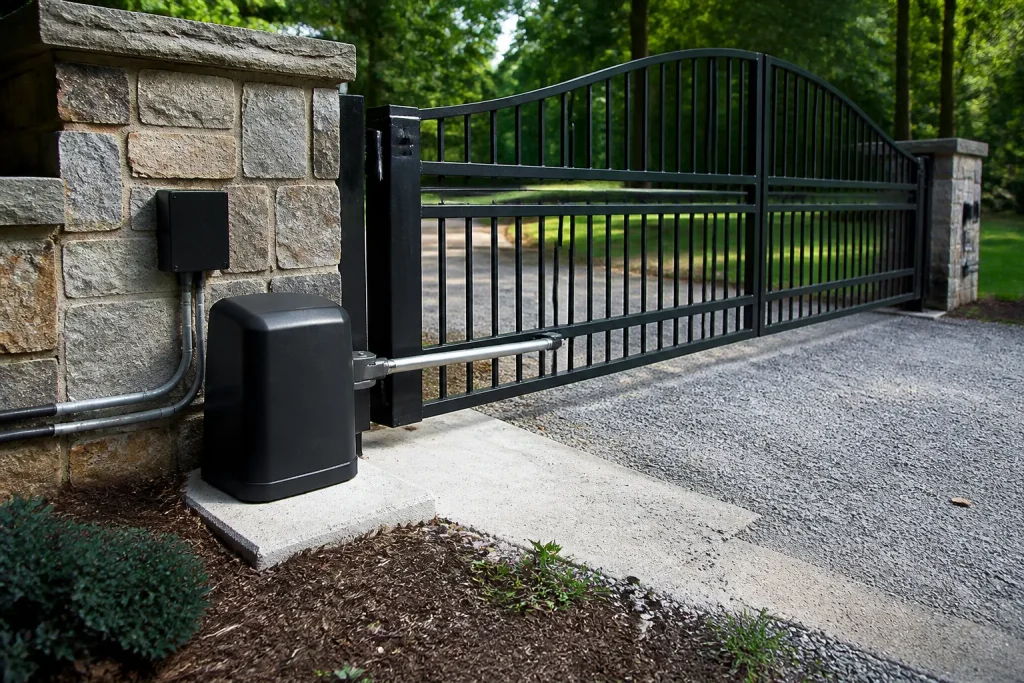
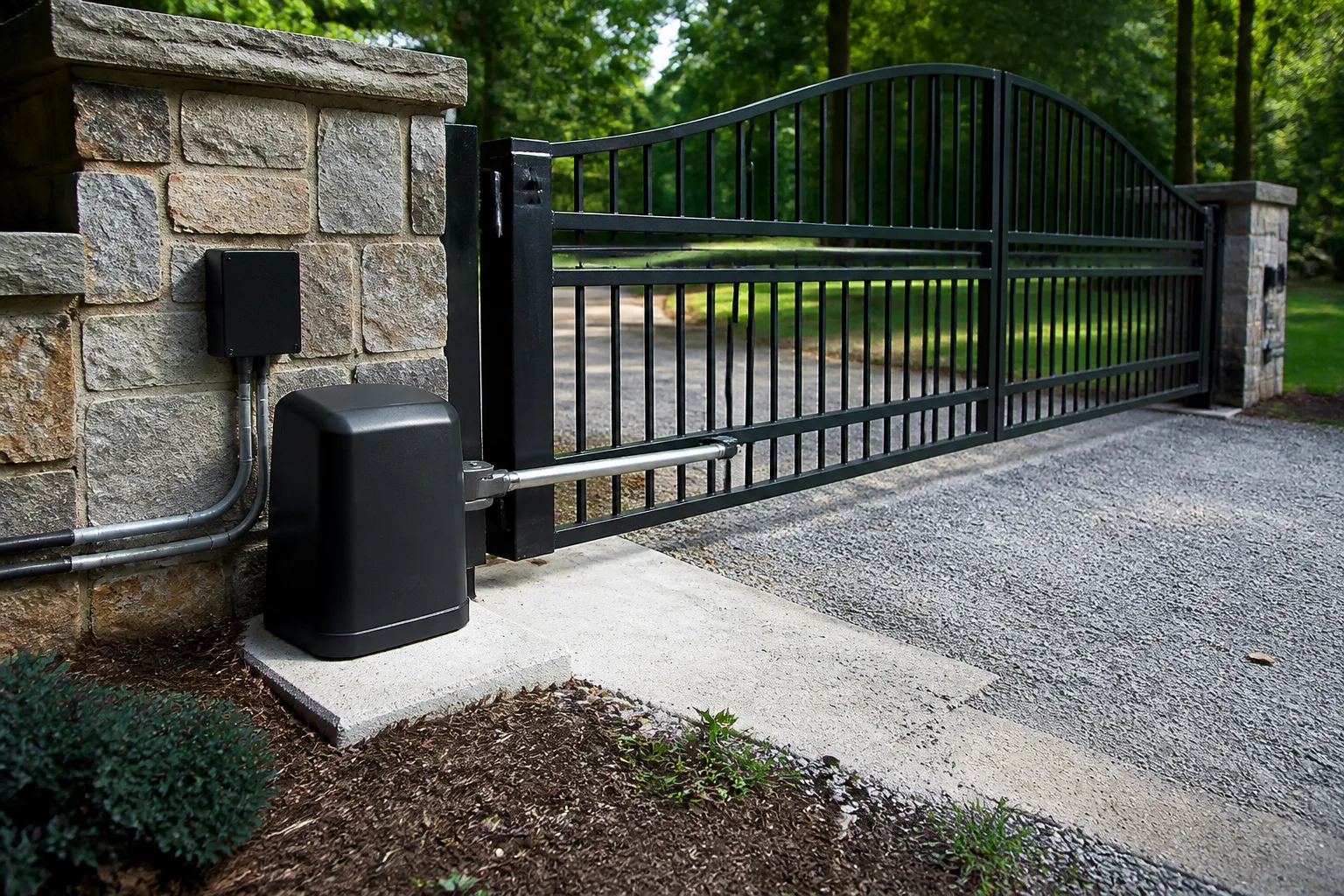
Ghost Controls sells the GC1 and GC2 as separate actuator arms, and they don’t share repair steps or parts. Treating them as the same unit leads to forcing a component that doesn’t belong, which is how a simple fix turns into a control board problem. The GC1 is the standard-duty arm built for lighter residential swing gates. The GC2 is the heavier-duty arm, longer and rated for wider, heavier gates. The internals, the limit-switch arrangement, and the mounting geometry differ enough that a technician should confirm the model before touching anything.
What to confirm before work starts:
- The exact model stamped on the actuator arm and on the control box.
- Which arm is paired with which control board, since mixed setups exist on gates that were expanded or repaired over the years.
- Gate weight and width, because an under-rated arm on a wide gate will keep failing no matter how well it’s repaired.
We service your brand at the model level, which is why Ghost Controls work here looks different from a general handyman’s approach. A generalist who doesn’t ask “GC1 or GC2?” is already behind. When the arm, motor, or opener needs attention beyond a tune-up, our gate motor & opener service covers the full range.
Why Knoxville Humidity and Freeze-Thaw Cycles Stress the Limit-Switch Housing
East Tennessee swings between muggy summers and winters that freeze at night and thaw by afternoon, and that cycle works on a gate operator’s limit-switch housing in a specific way. The housing is where the operator knows when to stop the gate. Moisture works into seams and connectors during the humid months, then the overnight freeze expands it and the daytime thaw contracts it. Over a few seasons that flexing can shift the switch position or let corrosion build on the contacts. The gate then over-travels, stops short, or reverses for no obvious reason.
Knowing a Knoxville gate lives with this cycle changes how a technician inspects the housing. We look for:
- Staining or water lines inside the housing that point to moisture intrusion.
- Contacts that show corrosion rather than clean wear.
- A limit position that has drifted from where it should be for the gate’s travel.
- Seals and gaskets that have hardened, cracked, or pulled away.
Bad grounds and loose wire nuts make it worse, because they add heat and resistance at the same points moisture is already attacking. A general repair service without gate-specific training tends to blame the board when the real issue is a moisture-stressed switch housing. For a broader look at our Knoxville coverage, see Knoxville Gate Repair Co.
What Can You Safely Check Yourself Before Calling a Technician?
You can safely check the antenna lead and the DIP switch settings before you call anyone, and those two checks resolve a surprising share of “the remote stopped working” complaints. You should not open the operator housing, touch the wiring inside the control box, or probe the battery terminals with tools. The operator holds stored power and moving parts, and heavy gate panels can crush. Leave anything past the exterior checks to a technician.
Safe checks you can do:
- The antenna lead. Confirm it’s connected and not pinched or cut by the gate frame. A loose lead explains lost range far more often than a failed receiver.
- DIP switch settings. If you added or replaced a remote, verify the DIP switches on the remote match the receiver. A mismatch means the gate simply won’t respond.
- Remote battery. A cheap, obvious check that people skip. Confirm the remote’s own battery is good.
- Obstruction. Look for debris, a bent hinge, or a gate that drags on the ground. The operator can only do so much if the gate itself is binding.
- Sunlight on the panel. Note whether trees or a structure have grown to shade the panel recently.
If the gate still misbehaves after these checks, that’s when the electronics and the control board come into play, and that’s a technician’s job.
When to Call a Professional
Call a gate technician when the gate reverses on its own, when it stops mid-travel, when the operator runs but the gate doesn’t move, or when the arm has been making grinding or popping noises. Those point to the limit switch, the actuator, or a wiring fault that needs proper testing. Also call if the control board shows any sign of water intrusion or scorching. Electrical faults and heavy gate panels are not a homeowner repair.
Our technicians have up to 8 years of experience on automated, electric, and access-controlled gate systems, including Ghost Controls, BFT, and Linear equipment. We answer 24/7. Fast dispatch from 7am to 7pm, Sunday through Friday.
Related services in Knoxville: for full-system replacement or a new automated gate, our gate installation page covers what a proper install includes.
Control Board or Simple Fix? The Red Flags That Tell You Which
A failing control board is the exception, not the default, and knowing the red flags saves you from paying for a board when the fix was a connector. Board failure usually shows up as total unresponsiveness, erratic behavior across multiple functions at once, or visible damage on the board itself. An actuator or wiring fault tends to be more specific: one direction fails, one zone of travel misbehaves, or the gate stalls at a repeatable point. Isolating which category you’re in is what a gate-only specialist does well.
Red flags that lean toward a board replacement:
- The operator is completely dead with a confirmed good battery and confirmed power.
- Multiple unrelated functions fail together, not just travel or limit.
- Visible scorching, burnt smell, or corrosion across the board.
Signs it’s more likely the actuator or wiring:
- One direction works, the other doesn’t.
- The gate stops at the same spot every time.
- Intermittent faults that track with weather or temperature.
- A remote or keypad that works in one spot and not another.
Replace the board only after the rest is ruled out. Throwing parts at a Ghost Controls operator is the expensive path.
The Bottom Line
Ghost Controls failures follow recognizable patterns. The solar charging circuit is the first thing to verify, the GC1 and GC2 need model-specific repair, and the humid, freeze-thaw climate in Knoxville is hard on limit-switch housings. Check the antenna lead and DIP switches yourself, then hand off anything inside the control box. A gate-system specialist working brand to brand, from the hinge to the control board, gets you a correct diagnosis instead of a parts-guessing bill.
If you’re in Knoxville and need help, Knoxville Gate Repair Co offers free estimates. Call (877) 820-8549. We answer 24/7. Fast dispatch from 7am to 7pm, Sunday through Friday.
Frequently Asked Questions
Why does my Ghost Controls gate keep dying even after a new battery?
Because the solar panel or the charge leads usually aren’t delivering power, so the new battery drains the same way the old one did. The panel, the leads, and the connector at the control board need to be tested before the battery is blamed. Call (877) 820-8549 for a proper diagnosis.
Can I replace a GC1 arm with a GC2 myself?
No, the GC1 and GC2 are different actuators with different mounting and internals, and the repair steps don’t carry over between them. The gate’s weight and width determine which arm is correct, so confirm the model with a technician before buying parts. Free estimates are available at (877) 820-8549.
Does Knoxville weather really cause limit-switch problems?
Yes, the humid summers and freeze-thaw winters here work moisture into the limit-switch housing, which can shift the switch and cause over-travel or short stops. Inspecting that housing early catches the problem before it damages the operator. Call (877) 820-8549 to book a look.
How do I know if my control board is actually dead?
A dead board is fully unresponsive with a confirmed good battery and confirmed power, or shows visible scorching or corrosion. If only one direction fails or the gate stalls at the same spot, the actuator or wiring is the more likely cause. Get it diagnosed correctly the first visit by calling (877) 820-8549. Estimates are free.
Written by the team at Knoxville Gate Repair Co.
Need Gate Repair Help?
Call Knoxville Gate Repair Co - the local pro we connect you with is licensed and insured, here with fast help in Knoxville.
(877) 820-8549